On 16 March, the Wildlife and Environment Society of South Africa (WESSA) Eco-Schools celebrated the transformative impact of the Eco-Schools programme in South Africa. The KwaZulu-Natal provincial award ceremony brought together teachers and learners to recognize two decades of environmental education.
Margaret Burger (centre) honoured for her outstanding contributionThe Birches Pre-Primary School receive their well-earned emerald award
EASTER Action would like to congratulate WESSA, the Eco-Schools programme, and particularly, this year’s recipients of notable awards: Epworth School and The Birches Pre-Primary School in KZN, for consistent environmental action over 20 years, plus the 40 schools from across the country, who received International Green Flags for their outstanding environmental efforts. Well done! Heart-felt congratulations also to Margaret Burger, who was honoured for her longstanding dedication in this area!
The organizers had asked me to do the keynote presentation, which was a wonderful opportunity to try out the pilot session of the What I Can Do (WICD) action programme with this audience of teachers. Based on observations and feedback, they found the interactive presentation as interesting and engaging as learners had done previously. This bodes well for the teacher workshop we are organizing for the near future.
Which sector produces the most greenhouse gases? A visual wow! momentA fun anonymous climate change quiz using Plickers
Ten days ago, supported by EThekwini Municipality and Green Corridors, around 100 environmental education / public awareness practitioners met for an Indaba to discuss how we can accelerate our joint response to the intensifying climate crisis, and to pull together an Environmental Education & Action Network.
The organizers invited me to open the discussion by talking about “What triggered you to start acting or doing what you do?” The same question was discussed among attendees later.
So here is the mystery: Why does knowing about a deadly danger not automatically cause action, or a change in behaviour? When and why do we act (differently)?
At a recent FAO webinar on environmental education, the presenters explained how knowledge about human behaviour can contribute to pro-environmental action.
According to Self-determination theory, humans need 3 basic psychological foods: Competence: being able to do things. Autonomy: having the freedom and power to be and do. Relatedness: being connected with others.
We do things, when we feel able, when we have courage to try: “I can do this, this is not beyond me. I have the capacity. I know what to do.” Knowledge and practical know-how are also part of it. Competence.
We do things when we have the freedom to do and act. “I can choose, nobody is forcing me, I can look and judge for myself, I can evaluate and make good decisions. I can find the means to do this.” Autonomy.
We do things when we can do it together. We need to know we are not alone, that there are others doing it. We even experience FOMO, the fear of missing out. Humans love getting together, agreeing on things, doing things with others who feel the same way, or doing things that bring us closer together. Relatedness.
One can design education programmes around this.
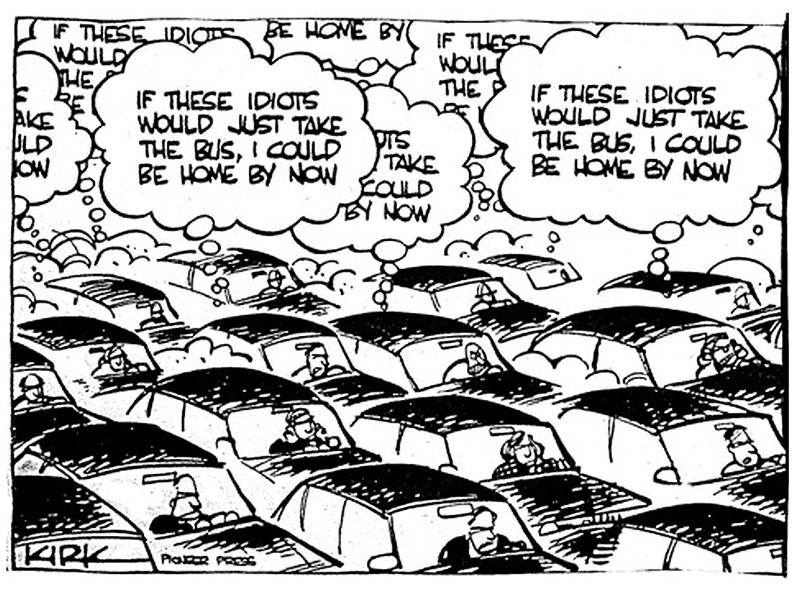
Individual behaviour can also change when systems are set up to make it easy.
“Environmental problems are collective action problems. Targeting individual attitudes and behaviours is not enough. We need to change the systems that influence our behaviours.” (S. Hanisch)
“Nudges: positive and gentle persuasion to encourage sustainable behaviour… Nudging is based on an understanding of the psychology of decision-making… We use mental shortcuts – do what everyone else is doing or take the easiest way… we follow ingrained routines or act on auto-pilot.” (from th booklet)
UNEP has published a downloadableLittle Book of Green Nudges, that shows how this principle can be applied to encourage people to make sustainable choices. If you can offer pro-environmental, sustainable behaviour options that are easier than unsustainable ones, that are attractive, that promote togetherness or that show how you can join others who are already doing them, and if you offer these options at the right time and place, then there is a good chance sustainable behaviours will win over unsustainable ones.
E=Easy, A=Attractive, S=Social, T=Timely spells out EAST.
As EASTER Action, we would like to add ER: E=Effective and R=Responsible.
R for Responsible. Those of us who have the most and spend the most, are most responsible for the problem and therefore most responsible to act (differently). People cannot consider the environment or the climate when their families are hungry, or plan for tomorrow when today is not taken care of. “Leaving no-one behind” is a key principle of the Sustainable Development Goals.
These were mentioned as caveats, but are best included up front.
So when did I start acting on climate change and the environment? I started eradicating exotic plants when it was my little part of nature, not someone else’s (ownership? custodianship?) and when I learned to tell alien from indigenous plants. I started acting on climate change once I realized just how big and bad my personal contribution was, and when I knew what actions would make a meaningful difference.
My little patch of indigenous swamp forest. My piece of nature. Mine to cherish and to protect. (Not as in ‘mine mine‘, but more like ‘my’ family, ‘my’ children: I love them and I am responsible.)
Oh the shock, realizing that one short drive into town and back home produces 10kg CO2 emissions! … Oh the joy, being able to avoid several tons of CO2 emissions per year for electricity!




 EASTERaction