WICD – climate change chronicles (Part 2)

We recently completed another round of workshops with Grade 10 learners, in partnership with Umkhumbane Schools Project in Cato Manor, Durban. Two WESSA youth educators joined us this time, hopefully we’ll work together in future.

Over three Saturday mornings, in August/September 2025, we worked through the next few units of the What I Can Do (WICD) About Climate Change edu-action programme.

Since the last workshop series in March was a while ago, we started with a refresher exercise. Instead of me (the facilitator) doing the talking, we split up the learners into small groups, and gave each group a print-out of one of the videos we watched previously, to refresh their memories.

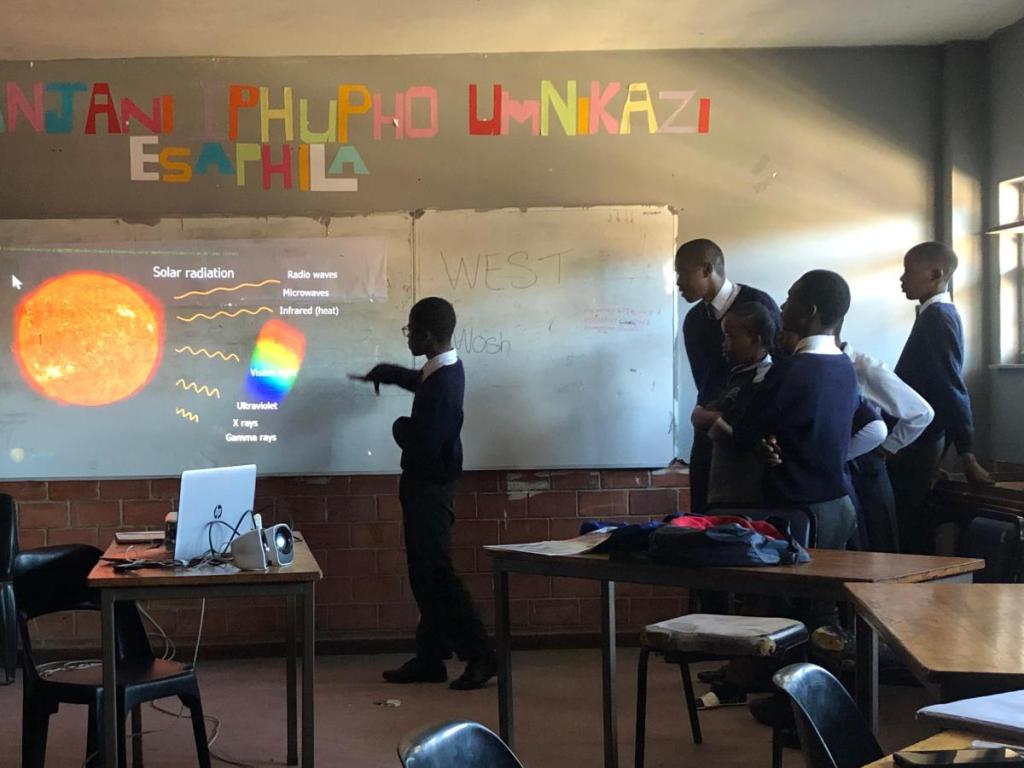
The learners then presented the slides to the larger group and gave brief summaries of anything they had remembered. I reminded them that this was not school and that there was no evaluation, that they should not feel pressured or stressed, but just quickly walk us all through some of the highlights. This was a fun and highly entertaining, the learners were very enthusiastic.
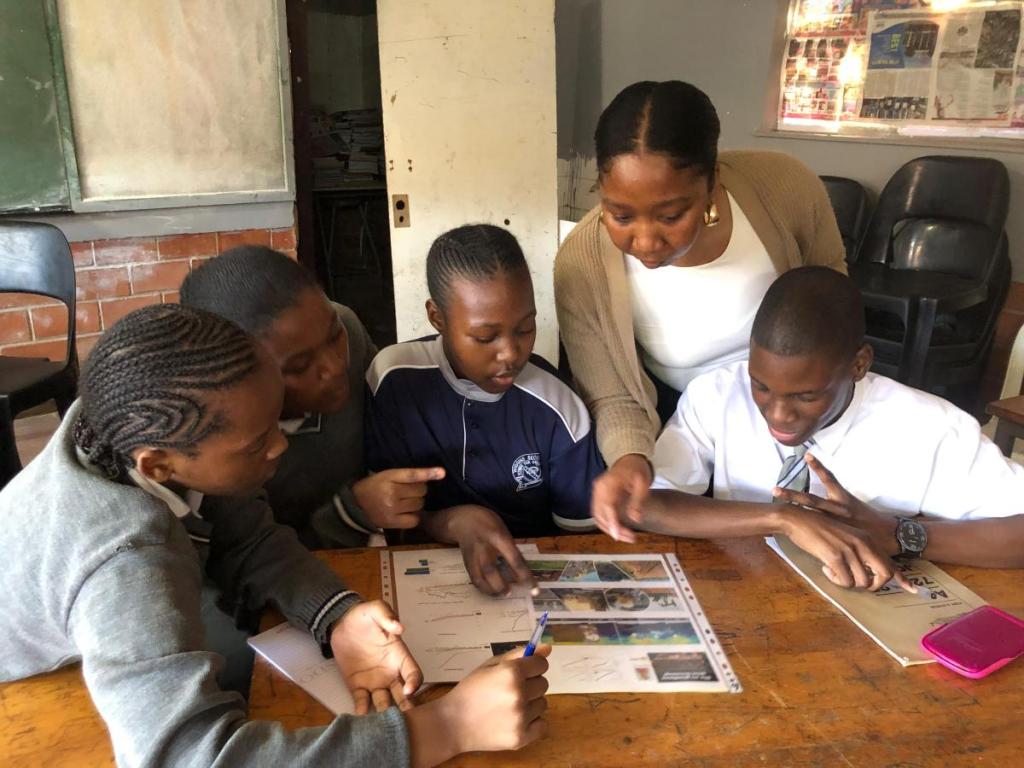
Learners refreshing their memories
Learners presenting a summary from the last workshop

Unit 7 “What does climate change look like”?

The video for this unit shows the many faces of climate change – changes in the weather, changes on land and in the oceans, changes in the frozen parts of the world, sea level rise. We all felt a bit depressed at the end. But everyone agreed when I said, “These things are happening anyway, whether we are aware of it or not. Myself, I prefer not to be ignorant of what is going on. I would rather know, because then I maybe do something about it, and also then I can adapt my life and not get caught by surprise.”

We then carried out two simple experiments about sea level rise caused by melting glaciers and warming oceans, and one about ocean acidification and the effect on calcium carbonate solubility.

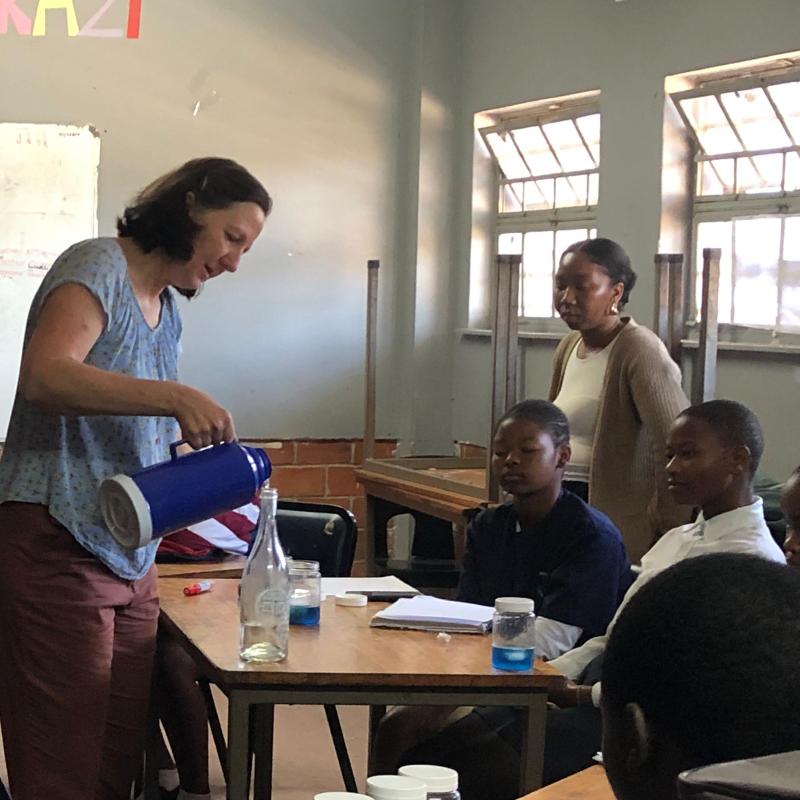
Do melting sea ice and land ice both cause a rise in sea level? Marking the ‘sea level’.
Demonstrating that hot water takes up more space than cold water.
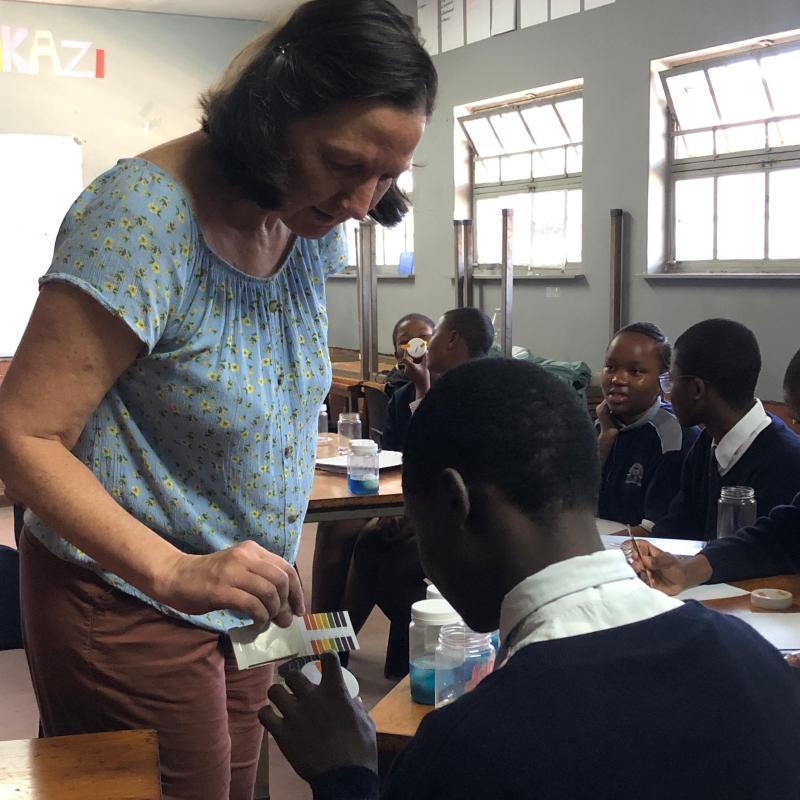
Do sea shells dissolve in acidic water? Checking the pH.

Unit 8 “Why should I care? How does climate change affect me?”

On the first day the learners went home with a questionnaire, to interview an older person in their household. They asked about any changes or disasters they had experienced during their lifetime.

On the second day, learners interviewed each other, in a mock TV show, talking about their family’s – or their own – experiences and opinions. “Who has family or friends who may not have heard about climate change? What could you say to them? How would you explain climate change to your granny?” I was blown away with the confidence and enthusiasm with which the learners threw themselves into this activity.

The results speak for themselves!

The Unit 8 video covers the many ways that climate change affects us as humans – our food systems, health and wellbeing, the economy – and how it can cause poverty, displacement and conflict. It explains how we depend on nature and how climate change threatens our entire society, often in complex ways.

While watching the video, learners listened out for facts that might answer the question: “Why did the Nobel Prize for Peace get awarded to people who spread knowledge about climate change? How could climate change disturb the peace, between individuals, communities or countries?”

Learners paired up to discuss this question, we collected ideas from the floor and discussed them in the big group. Responses included: communities or countries fight over scarce resources, such as food, wood or water; people fight with their governments over policies or unfair food allocations; activists fight with law enforcement; ‘false activists’ turn environmental causes into terrorism. Another two short videos, by international peace organizations, rounded off this section.

The learners’ responses were very insightful and thought-provoking.

Unit 11 “What can I do about climate change?”

Finally we get to the most important part: action. The interactive video highlights the top priorities, based on where the most greenhouse gases come from, and where action would therefore have the greatest ‘bang for buck’. It also talks about climate justice, an important topic for young people living in underprivileged conditions.

Unit 13 “Electricity”

The third day was devoted to the top action area: energy – more specifically, electricity. We started with a game called ‘Circuit Breaker’, where we passed ‘electrons’ from a ‘battery’ around a ‘circuit’. One person was the ‘switch’, another the ‘radio’, another a ‘resistor’. When things got out of hand, and ‘sparks’ started to fly, the ‘circuit breaker’ tripped, and the game had to be ‘reset’.

How fast can you make the ‘current’ flow?

Then we talked about electricity in the home: the distribution board, the electricity meter, different ways of purchasing electricity.

It’s easy to save electricity in the home, just by doing things slightly differently. Thereby we can reduce our energy carbon footprint as well as our monthly electricity bill. So how much power does it take to boil a cup of water – in a kettle? On a stove? In a microwave? We timed boiling water with different appliances, and converted the answers to kWh, grams of greenhouse gas emissions, and into Rands and cents. Then we cooked a pot of rice by wrapping it in a blanket.

Boiling water in a kettle used the least power.
A pot of rice, once boiled, can cook in a hotbox without further power.

On a personal note: I (Marlies) would like to thank Martha Bishai and her team at the Umkhumbane Schools Project – especially Precious, Nokwanda – from the bottom of my heart for their support and partnership. Years ago Martha invited me to engage their biodiversity group. Since then Martha’s encouragement and participation inspired me to keep going forward, and to dare think bigger and aim higher. I am deeply grateful for believing in this work and investing in EASTER Action!

WICD – climate change chronicles (Part 1)

With this blog I’m happy to share the experience from the first three sessions in a series of climate change workshops with Grade 10 learners, in partnership with Umkhumbane Schools Project in Cato Manor, Durban.

The plan is to work all the way through the What I Can Do About Climate Change edu-action programme, with the same group of learners, firming up the contents, seeing how it is received, and refining the program so it can be implemented by other facilitators in the future, making it more accessible and impactful.

Over three days in March 2025, we completed six units with the same group of students, allowing us to gauge their feedback and see how the material was received. We ran three 2-3 hour sessions over consecutive days, with a mix of short video presentations and interactive, hands-on activities. We covered 6 units, and plan to carry on later in the year.

Based on the heart-warming and enthusiastic feedback from the learners, it is clear they found the sessions enjoyable and valuable. As the facilitator, I also had much fun, and learned things that will help me update the activities, and add some more teaching material. 

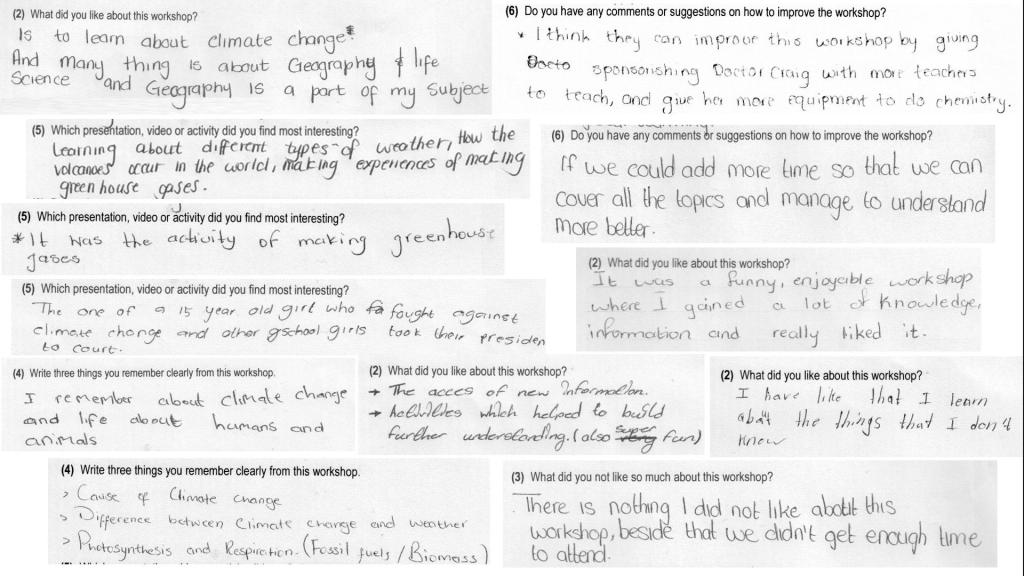
Here are a few samples from learner feedback. My favourite: “It was a funny, enjoyable workshop where I gained a lot of knowledge, information and really liked it.” – If even one learner felt like that then mission accomplished!

Keep on reading for a more detailed account.

Unit 1 “What on earth is going on?” – about youth activism

The programme kicks off by empowering learners, showing them that before we are individuals, we are citizens of the world. Before even mentioning climate change, this introductory session places the youth at the forefront and shows the role they play in world affairs. It encourages young people to think at the global scale, rather than taking the small-scale view of ‘me, here, now’. Hopefully this arouses an inner sense of importance, relevance, empowerment and capacity.

The interactive video followed by two activities always work well. I have done this many times so there were no surprises. The fun quiz, using Plickers, is always a favourite.

Unit 2 “What is climate change?” – a brief overview

The video gives a very brief overview of climate change. It explains how the world is getting warmer, how this is causing record-breaking global warming and devastating world-wide impacts. Climate change is caused by a sudden recent rise in greenhouse gases to levels which humanity has not seen before. It is a human-made crisis, and it will get a lot worse unless we urgently do something about it.

The activity involves a community survey. The survey is not about gathering information or finding out what people know, its purpose is to give learners a way to ‘interview’ friends or family and so introduce the topic of climate change respectfully and in a neutral and engaging way. At the workshop, learners filled in the survey themselves. They said it was ‘easy’ and were confident and keen to take a second form home.

Two days later, their feedback was very positive. They enjoyed doing it. Some learners had interviewed school mates, or the whole family, or a brother. One learner who had interviewed a cousin at university, felt pleased that she knew more about the subject than the university student.

The feedback they got in turn, was also encouraging: they encountered positive interest rather than any negative responses, and it helped them to talk about the information that they had learned in the workshop.

Unit 3 “Weather or climate?” – the water cycle

The video explains the difference between weather, climate and paleoclimate, and the science of the water cycle. While we couldn’t get the students’ tablets online, we managed to do a live demonstration using Windy.com to show real-time global weather patterns. The learners were fascinated, especially when we located a cyclone over the Indian Ocean.

Unit 4 “Why is the world getting warmer?” – the greenhouse effect

The video starts relatively simple, but then gets increasingly technical. The learners were surprisingly interested in the science. I had planning to stop the video before it got to some really advanced topics (such as the radiation absorption patterns of different atmospheric gases), but they were all keen to carry on.

The learners all take science as a subject, so they had a reference point, and this lesson must have connected with things they already knew, they were just hungry for more! It was delightful seeing in them this appetite for scientific knowledge that also drives me to dig deeper into a topic until I am satisfied and my questions have been answered. 

One activity explains global warming in terms of body temperature, to illustrate the importance of one degree of warming. Except for two willing volunteers, most felt too old for the ‘running around’ part, but they were deeply interested in all the information about ambient and body temperature. 

It was really sweet: when I gave some learners a lift back to their school at the end of the workshop, they started rehearsing in the car the different temperatures: healthy body temperature, what is a fever, when you should go to hospital, what temperature is deadly. They found it fascinating that feeling hot is not the same as being sick. Well, it IS fascinating, isn’t it?

I had also pointed out how important this knowledge is for when they are adults and have their own children. It had little to do with climate change, but I love bringing real-life knowledge into these lessons, to show how science is not just something you learn at school, but something that is important in life – quite literally!

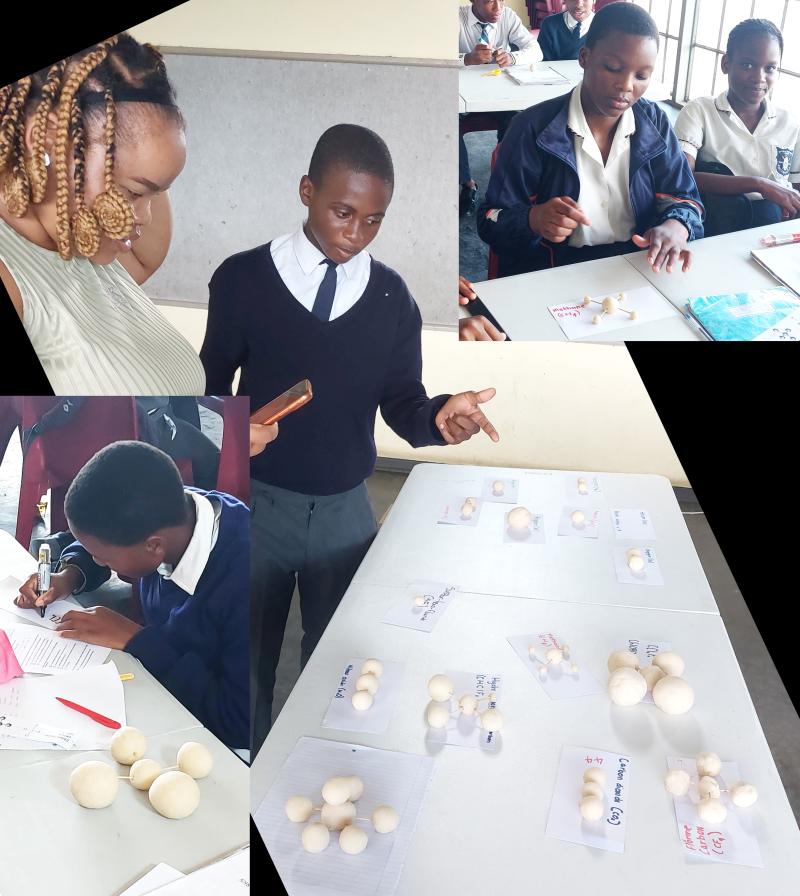
In another activity, learners created molecular models of atmospheric gases with playdough and match sticks, and we discussed which are greenhouse gases – or not, and why.

Unit 5 “Where do greenhouse gases come from?” – the carbon cycle

The next video shows how the main three greenhouse gases are deeply connected with life and living things. It turned into an impromptu science lesson, as I realized that some of the information in the video assumed prior knowledge they did not have.

We burned biomass (a dry twig) and watched the wood turn to black coal, we demonstrated how white wax and clear paraffin are indeed carbon-based fuels (by catching soot from the flame on a white saucer), and how burning a candle under a jar does indeed use up the oxygen in the air (the flame dies), producing energy (the flame) and water (steamed-up jar) – we could have tested for CO2

The biggest thrill was a methane experiment. I had brought a bottle of gas, and showed them pictures of how I had produced this from kitchen waste and pond water. (Ideally they should do the experiment themselves.) We bubbled the gas through soapy water and ignited the foam, creating a little fireball. We all got terribly excited! What a memorable moment!

Unit 6 “Why are greenhouse gases increasing?” – the root causes of climate change

This unit explored the root causes of climate change, specifically fossil fuels. This led to an important side lesson, and I realized we need another video on what fossil fuels are and how they are formed.

The session wrapped up with a highly interactive game, ‘Fossil Fuel Bingo,’ about which everyday fuels are fossil fuels and which are biomass fuels. It was so much fun they asked to play it a second time.

This workshop was a powerful reminder of how eager young people are to learn and get involved. We’re looking forward to continuing our journey with them later this year. Stay tuned for our next workshop as we continue to build a generation of climate-doers.

On the best-attended day we had 35 learners, the very limit of how many one facilitator can interact with effectively.
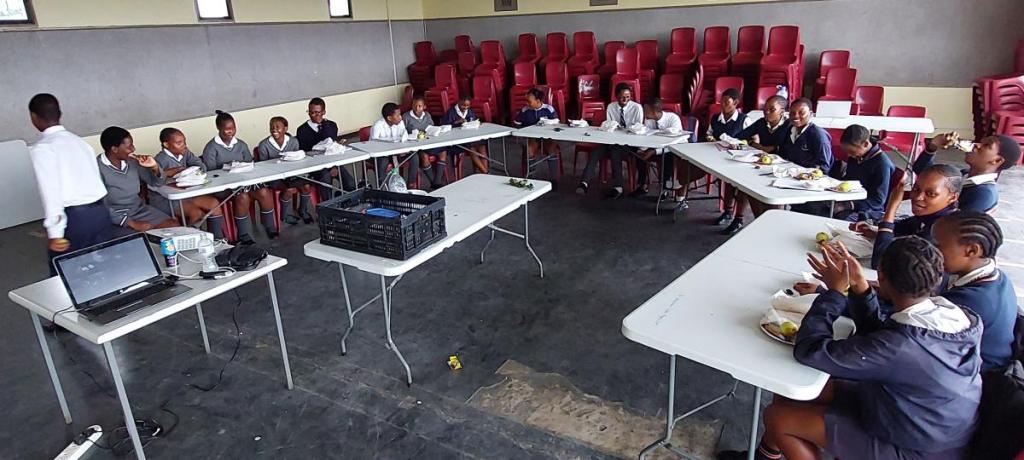
With fewer learners one can sit in a circle which is more intimate and feels less like school.

Teaching with ulterior motives

Last week I presented to around 70 pre-service and 3rd year student teachers at Edgewood Campus (UKZN School of Education). Even though the topic was ‘climate change’, the lesson was ‘teaching methods’.

Prof Angela James had asked me to present, partly to give them an introduction to climate change, partly to demonstrate to the students some simple interactive teaching methods.

Yes, I may be a qualified educator, but I am not a school teacher or university lecturer, and my primary goal is generally not to transfer information and to help students pass exams. When I teach, I tend to have ulterior motives.

Pass on passion

In past years, when I did all those insect events with children and adults, my primary goal was to share my passion, to get others as excited and in love with insects as I am. I wanted people to appreciate these ‘lesser’ life forms, understand their value and their needs, and the importance of healthy ecosystems, so they would do things to protect and restore nature.

Stoking the in-born love for nature and other life forms (called ‘biophilia’)

Inspire action

Now as I run ‘educational’ events on climate change, my goal is for people to truly and deeply ‘get‘ the most important facts about climate change, understand the nature of the problem, the urgency of the situation, and find out how easy it is to make a difference, and encourage people to go and do their bit.

The ulterior motive behind teaching people where most greenhouse gases come from is obvious: start here!

Empowering with know-how

I have also created and run formal training courses over the years. My goal then was empowering people to do stuff they didn’t know how to do before (rather than just knowing stuff), building useful skills that would make them more effective in their jobs.

We learn best by doing. Not just by listening and watching. Learning is most effective when it is hands-on. That may require detailed, step-by-step instructions, so you don’t get lost, so you can do it again later, on your own, without an instructor’s help. But the important thing is that you do it, yourself. Deep, lasting learning comes when we apply and use head knowledge, in practice. The more relevant to real-life, the better.

Building relationships

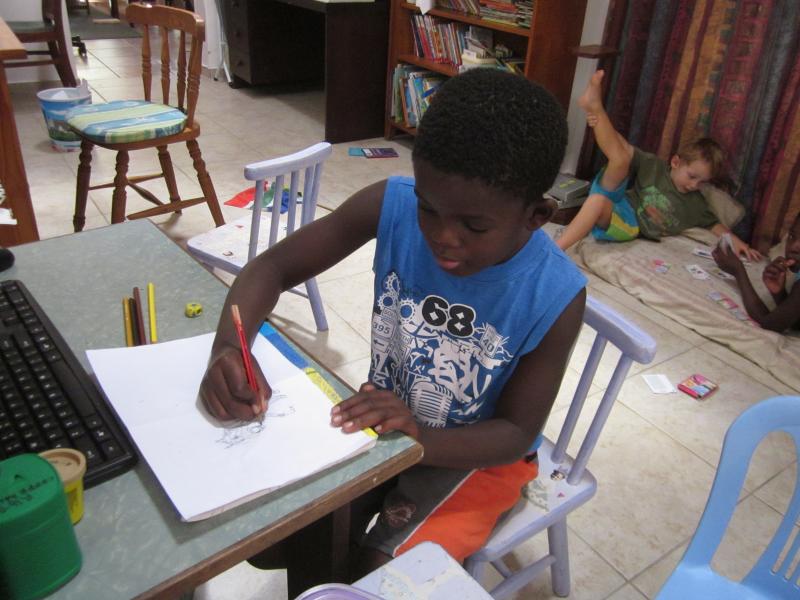
Back in the days when I homeschooled my children, my primary goal, again, was not education. People homeschool for all kinds of reasons. My goal was to spend time and bond with our adopted children. They had never experienced being at home with mom, and I wanted to give them that foundation. Later I also homeschooled our biological child, again not for the sake of education, but to nurture him through some difficult years until he was ready for mainstream school.

The teaching part of homeschooling was just an excuse to spend time together and do fun things together. Like reading! Or doing math! Or doing science!

Learning is playing

So from my perspective there is absolutely nothing onerous about learning. My experience from homeschooling and from many educational events, with children and youth, is that kids are born hungry and eager to learn. They are wired to learn, and they find learning new things fun and satisfying.

Even newborns are like little live computers, switched on and buzzing, ready to record and store and process every bit of input, from the moment they take their first breath (and even before birth).

Toddlers don’t care if they fall over while learning to walk – they just get up and try again, until they get it right. They keep asking ‘why? why? why?’ Failing and trying again and asking for information comes so naturally to them. They learn skills as they play. That is why it is so important for young children to get lots of opportunity to play.

Discovering the joy of reading before the art of sitting

Sadly, it is possible for this natural hunger for learning to be ruined, perhaps by the school system (which emphasizes rules, marks and reports), perhaps by careless teachers or demanding parents, by making the learning experience painful, stressful, boring, discriminatory, etc. or by making failure shameful, embarrassing, anxious, etc. What a lost opportunity!

Rediscover the joy

Adults who have lost the joy in learning, may even find it again, together with their learners, by being playful, exploring, not being afraid of getting it wrong the first time. It is OK not to know things. Teachers really shouldn’t feel they must have an answer for everything. In fact, the more you learn, the more you realize how much you don’t know, and this can make one eagerly open-minded to new ideas and trying new things.

Learning is not a serious business, it is playful. New knowledge – and the trial-and-error that often goes with it – is one of the things that makes life enjoyable and worth living. Over time, and with hard work and repetition, you also learn to do things skillfully, systematically aiming for excellence. This can further add to the pleasure and satisfaction of learning.

As adults we have this amazing and important role to accompany children for a brief time on their life-long road of learning. Teachers – and educators in general – have an opportunity to walk some of this journey with their learners. It is a privilege and a calling and a huge responsibility. Let us make the most of it!

Gamification

After a recent workshop, one participant in his feedback wrote, “the gamification and interactive-ness of the activities will improve the youth and children’s understanding of climate change.”

Gamification.’ I like that word. It means using games or game-like approaches in non-game contexts or activities, to engage people, motivate action, promote learning and solve problems, in both formal and informal situations.

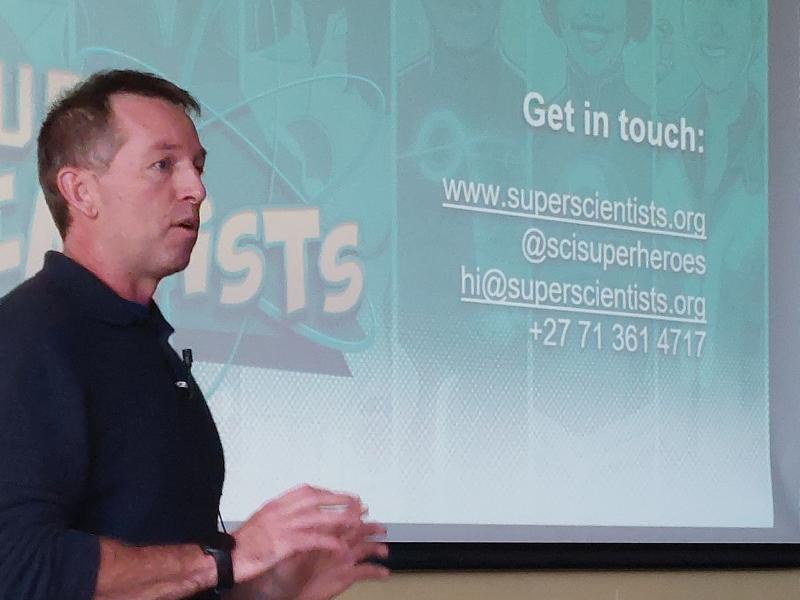
Talking about gamification, after my climate change presentation, Justin Yarrow from Code Makers presented some of the amazing playing cards, comics and games his team have produced. ‘Super Scientists‘ super-hero characters – based on real-life scientists and science champions – promote science and STEAM careers for young people. He demonstrated how you could point your phone at a ‘Super Scientist’ poster, and then – I don’t know – it suddenly became interactive and you could find out about the real person behind the super-hero. Totally cool!

Justin Yarrow of Super Scientists
Thanks to Edgewood for the opportunity!

Progress with partners

Let me report back briefly on three recent events with Kloof High School, which have been extremely rewarding and motivating.

After attending the recent WESSA KZN EcoSchools Prizegiving, where Kloof High got their first Green Flag for environmental activities, Corné van Vollenstee (Life Science subject head, who also heads up the environmental club) reached out to me with a request to help the school introduce environmental education across all subjects.

Wow! This was so proactive of Kloof High, and such perfect timing for EASTER Action!
Having finalized the first four units of the What I Can Do About Climate Change programme, and piloted them from my side, it was time to test the hand-over process. One-by-one we will never reach enough people to make a measurable difference. Knowledge, know-how and determination to act – these have to spread throughout society, and urgently!

Introductory session

To begin with, Corné wanted to engage her fellow teachers, to try and get everyone interested and on board. So, end of May, we had an interactive session on climate change with the entire staff of 65, to raise this critical global issue.

The teachers were very interested and responsive, which was encouraging. Positive feedback included: “Very interesting and informative… interactive and engaging… Activities were an eye opener… A real wake up for me!… The practically and relevance of the topic and how it relates to the educational space… Very user friendly advice… Thank you we enjoyed. Please come again. It was so educational.”

Some asked for “more activities that we can do at home to help with eco systems… a digestible version of the presentation to direct towards learners/youth… should be an ongoing initiative.”

Getting ready for the ‘WOW’ moment that never fails to leave a lasting impression: which sector produces the most greenhouse gases – and by how much…

Co-production workshop

Being very supportive of this new initiative, the headmaster agreed that we should pursue a partnership to take this work forward. The plan is to run drafts of the 80-or-so activities that form part of the WICD programme through a process of co-production and review, and for the teachers to try out some activities with their learners.

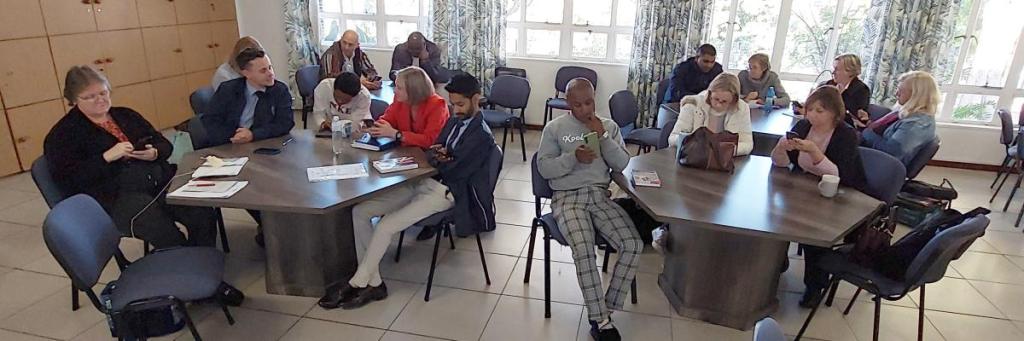
End of July, the 16 subject heads participated in a 1 1/2 hour workshop, where they received a more detailed introduction to the WICD programme. Then we spent an hour watching the first four little videos, and going over the first batch of activities. There was something for almost every subject.

The teachers each picked an activity that might be relevant for their subject, reviewed it and filled in a detailed feedback form. They responded to questions such as: What do you like about this activity? Pros? – What do you not like? Cons. – What practical or other challenges do you foresee? – Does the Aim make sense as stated? If not please suggest alternative. – Can it double up as a school project or practical? – If it allows assessment, how would you assess it? Draft a rubric. They rated, if applicable, the suitable age or grade level for the activity, and in some cases indicated a particular part of the curriculum the activity speaks to.

The very helpful comments and suggestions are being incorporated into the programme currently.

Even though it was just a short session, and only a limited number of activities could be processed this time round, it proved that such a co-production workshop can generate much valuable feedback that draws on the practical expertise of in-service educators.

Subject heads logging into their private page on the EASTER Action website.

Multiplier workshop

Apart from expanding environmental education within their own school, Kloof High also expressed a wish to increase their environmental activities in the wider community.

It was time to test the ‘Multiplier’ concept, which takes the ‘train-the-trainer’ idea one step further: yes, empower educators to engage their learners, but then also empower learners to engage their families. By introducing activities that involve real-life activities in the home environment, we hope to spread knowledge and know-how way beyond the immediate participants, building climate literacy, and hopefully stimulating citizen climate action in the wider society.

Each participant received access to the videos and activity guides for the first four units, to use with their learners, via a private workshop page on the EASTER Action website. We have set up various feedback forms, to harvest comments and experiences, and we look forward to finding out if this approach works. Ultimately we hope that showcasing what others are doing will help motivate engagement and participation. It is a work in progress.

The workshop was attended by 11 amazing people: 2 school teachers (Hillcrest High, St Mary’s) and 9 environmental educators (including from WESSA, Wild Trust, Umkhumbane Schools Project, DUCT).

Feedback from participants: The small group format was much appreciated, as it gave everyone a chance to meet properly, network and hear about what others are doing. It also allowed ample time for questions and discussion. The programme content was described as “outstanding, especially with the short videos for each section… clear and easy to understand… useful… well-presented… Having the chance to go through each of the highlighted modules, watch the videos, and try the activities, was very beneficial… The activities were very useful in giving me ideas on how to better facilitate a lesson on climate change.”

Participants suggested keeping future workshops short and small, and also providing teaching tools (activities and videos) that speak better to younger learners at their level. The current content is aimed at high school learners, and is also suitable for grade 6&7.

Thank you everyone who came and made this such a memorable and pleasant day! And thank you Corné for your passion, and Kelly for your help with the organization!

The wonderful participants of Multiplier Workshop ‘Aardwolf’ – hopefully the first of many.

Celebrating with WESSA Eco-Schools

On 16 March, the Wildlife and Environment Society of South Africa (WESSA) Eco-Schools celebrated the transformative impact of the Eco-Schools programme in South Africa. The KwaZulu-Natal provincial award ceremony brought together teachers and learners to recognize two decades of environmental education.

EASTER Action would like to congratulate WESSA, the Eco-Schools programme, and particularly, this year’s recipients of notable awards: Epworth School and The Birches Pre-Primary School in KZN, for consistent environmental action over 20 years, plus the 40 schools from across the country, who received International Green Flags for their outstanding environmental efforts. Well done! Heart-felt congratulations also to Margaret Burger, who was honoured for her longstanding dedication in this area!

The organizers had asked me to do the keynote presentation, which was a wonderful opportunity to try out the pilot session of the What I Can Do (WICD) action programme with this audience of teachers. Based on observations and feedback, they found the interactive presentation as interesting and engaging as learners had done previously. This bodes well for the teacher workshop we are organizing for the near future.

2020 Vision

Globally, biodiversity teeters on the brink of the next great extinction since the demise of the dinosaurs, only this time human activity, not meteorites, are the cause.

What is less widely understood is that plant biodiversity is intricately linked to the survival of insects, and v.v. and together they support life on land.

As the world strives for sustainable development and tackles critical environmental challenges, a deeper understanding and love of nature is essential. Educating children for the present and the immediate future is key to achieving global sustainability.

2020Vision is an education initiative that wants to give young people ‘glasses’ of passion and knowledge. Humanity must learn to coexist in harmony with nature. The world needs passionate young people who can see clearly, who understand the workings of nature and global environmental challenges, who know what can and must be done about it and who are motivated to act for the environment, both now and in their future careers. ​

This innovative school curriculum enrichment programme supports biology, life sciences and environmental education. The programme will include:

  • Teaching resource kit, containing per school:
    • 20 copies of What Insect are You? 
    • A teachers’ guide with
      • 10 stand-alone topical lessons, designed to supplement the South African life sciences curriculum (grades 4 to 12) but suitable for extra-curricular enrichment even for non-science learners of any age;
      • Instructions for simple, fun practicals involving live insects;
      • Classroom activities to stimulate discussion;
    • 10 audio-visual episodes;
    • Additional relevant articles, audio-visuals and Internet links;
  • Teacher training workshops targeting 20 schools at a time;
  • Outdoor educational event for 4 children and 1 teacher per school.

2020Vision is unique in its focus on insects. Insects are the dominant life form on earth (at current reckoning), are indispensable in nature, live everywhere, are small enough to handle yet large enough to observe, and are popular with children. Insects are perfect for learning about nature and the environment.

The resource materials, particularly the book and videos, are designed to arouse heart-felt interest, ignite passion and promote a joy in learning, playfully but convincingly covering important biological, ecological and environmental topics. The insect-centered topics surprise and delight children as young as 6, university students, adults and pensioners.

6-min demo video

The first four units are ready for launching, as soon as funding is available.

Please contact us for further information:

  • Dr Marlies Craig (mcraig@whatinsectareyou.com)
  • Henre Benson, CASME (benson@casme.org.za / 031 826 2508)

Partners