
Today, on World Soil Day, we celebrate the fact that healthy, living soil in nature is full of dead things, dung, fungi, gazillions of tiny creatures, bacteria and nutrients – just what plants need to grow, in their great variety, producing biomass, and generating food for everyone. Let us remember that in nature we all eat, poop and die.
This World Soil Day I want to share my experience with recycling human waste. Discarding our precious waste is such a waste! And flush toilets waste precious water. A human composting toilet saves both water and nutrients to fertilize the garden.
I’m not crazy, and I’m not the only one doing this! One can even buy human composting toilets online. But I didn’t want to spend loads of money on fancy equipment or install something I might regret. Instead, I attached an old broken toilet seat to an old plywood plank, and laid it across the bathtub which we never use anymore (because we take short showers to save water), with a bucket underneath, and another bucket with compost.
I tried both well-decomposed leaf litter from a compost heap in the garden, and fairly recently cut lawn clippings. (We dump cut grass in a pile under a tree. After 2-3 weeks it turns white, covered in mold.) Both kinds of compost worked fine.
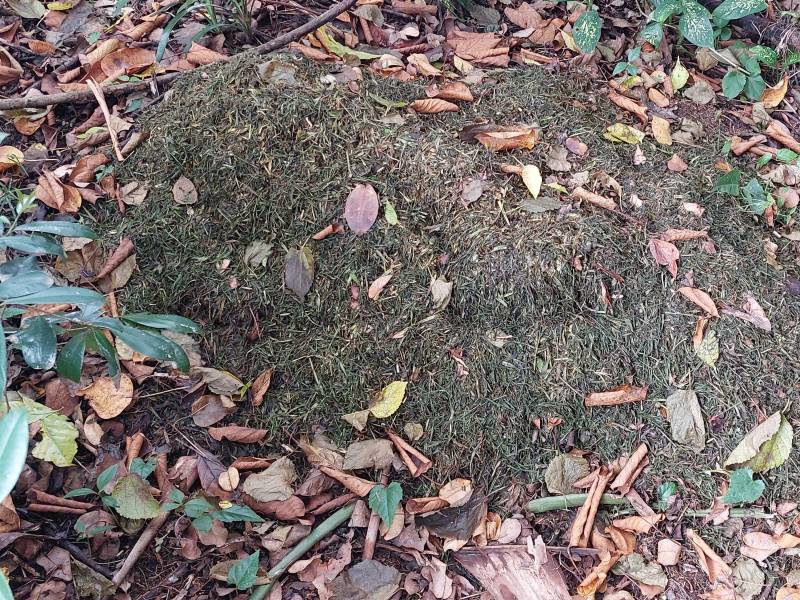

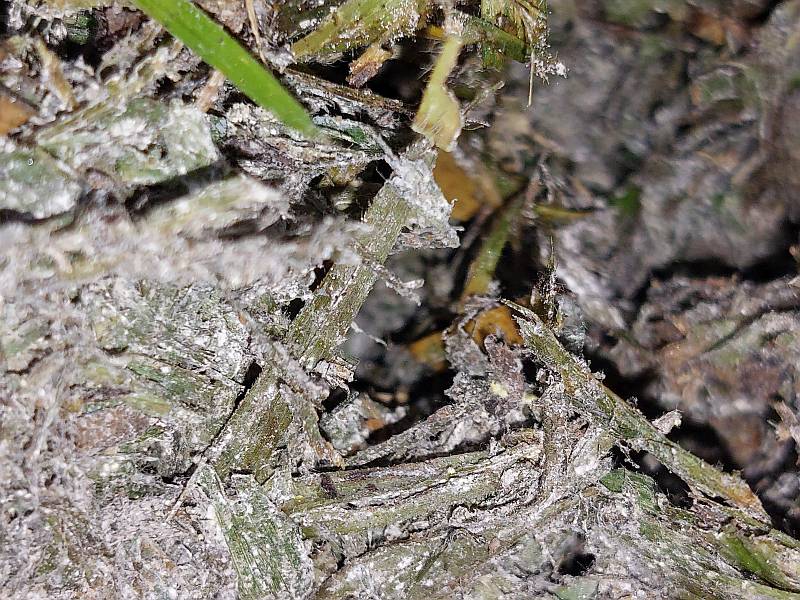

It’s very simple: 1) scatter some compost in the bottom of the toilet bucket, 2) do your business, 3) cover the business with another two handfuls of compost. Ok, and then put a lid on.
Surprisingly, it does not stink. The compost seems to absorb the bad odors. All you smell is the pleasant forest fragrance of the compost itself. It’s best to keep the solids and liquids separate, so don’t pee in the bucket with the solid waste. (Diluted urine can be used separately as fertilizer.)
Anyway, every week or two I emptied the bucket it into a compost box. This didn’t stink either. After several months I kind of lost interest in the experiment, but the pile of sh*t continued to do its job, and a year later I found a load of beautiful ‘brown gold’: high quality fertilizer for my garden.

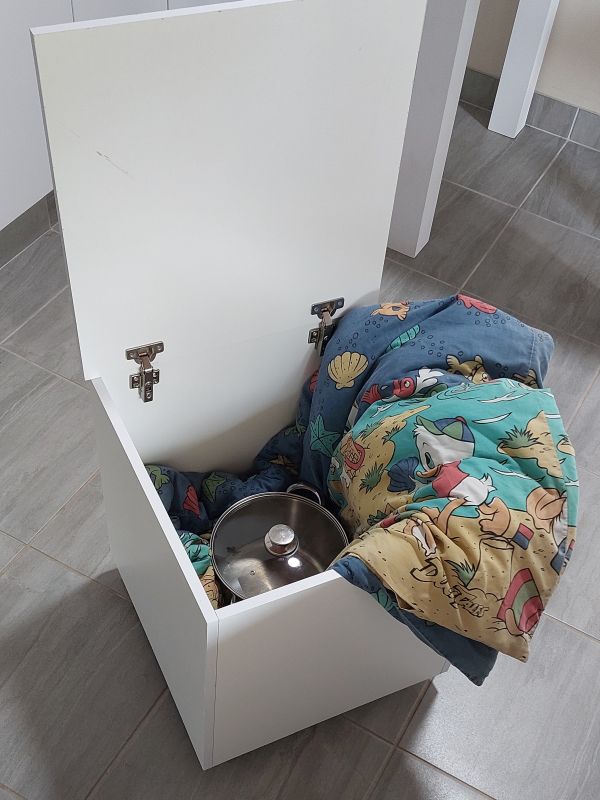
To do this permanently, one would have to rotate through two or more separate compost boxes, to give each batch a chance to decompose fully.
What about contamination and disease? Helminth eggs and protozoa cysts die off at a certain rate, depending on various factors such as aeration, temperature, moisture and sun exposure, so the compost becomes safe after a certain time – anything from 6 months to 2 years. The climate, the setting, the material mixed with the waste, all play a role. Digging the compost under the soil instead of sprinkling it on top increases safety. I can’t help thinking my approach of adding ‘living’ compost from the garden would have sped up the natural composting process. For further information, this detailed report is a useful source.
My biggest problem was convincing my family to help collect this ‘brown gold’. They understand in principle why it is a good thing, but I suppose we have all been conditioned to consider our waste disgusting, rather than natural and useful. “Expand your mind, allow yourselves to think new thoughts, try work with me, this is just one more way to live sustainably,” I tried to motivate them. No success (yet). Maybe some day we won’t have a choice.
Seeing how that flooding event here in Durban damaged so much infrastructure, including sewers and water purification plants, and seeing how a year later raw sewage was still flowing in our streams and onto our beaches, made me think how with climate change we can’t take things for granted anymore. Perhaps I’m being over-dramatic, but there may come a time when we will have to manage our own waste, who knows. Best to be prepared. It’s called disaster readiness.













 EASTERaction