
We recently completed another round of workshops with Grade 10 learners, following the first round in March, in partnership with Umkhumbane Schools Project in Cato Manor, Durban. Two WESSA youth educators joined us this time, hopefully we’ll work together in future.
Over three Saturday mornings, in August/September 2025, we worked through the next few units of the What I Can Do (WICD) About Climate Change edu-action programme.
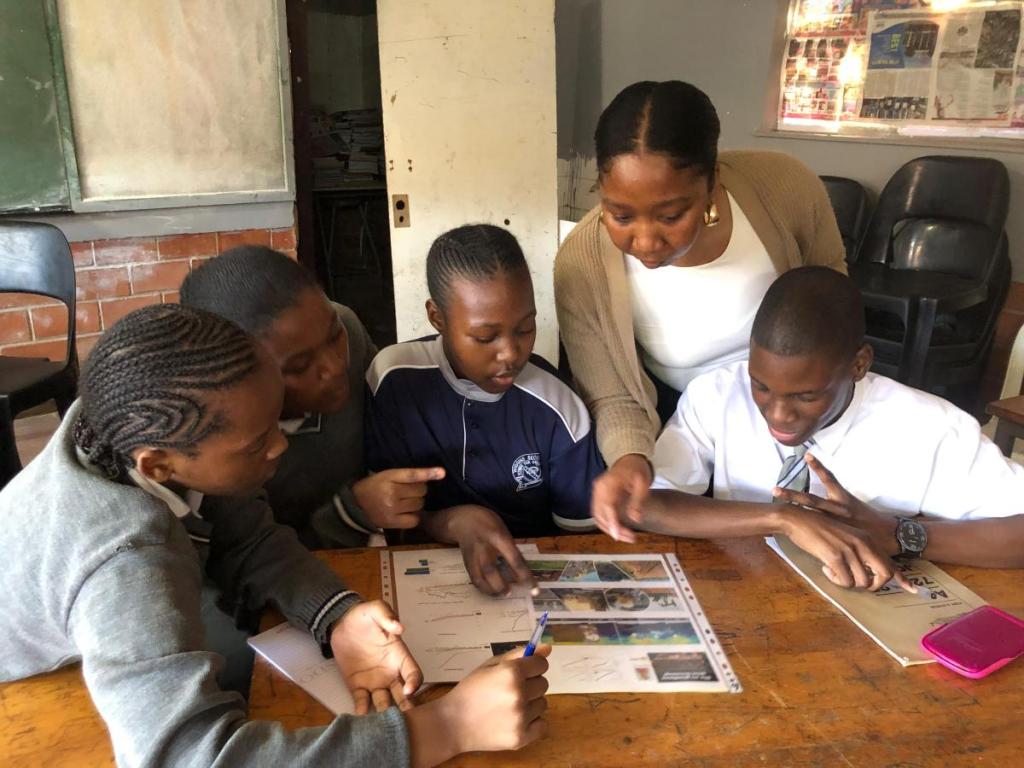
Since the last workshop series in March was a while ago, we started with a refresher exercise. Instead of me (the facilitator) doing the talking, we split up the learners into small groups, and gave each group a print-out of one of the videos we watched previously, to refresh their memories.
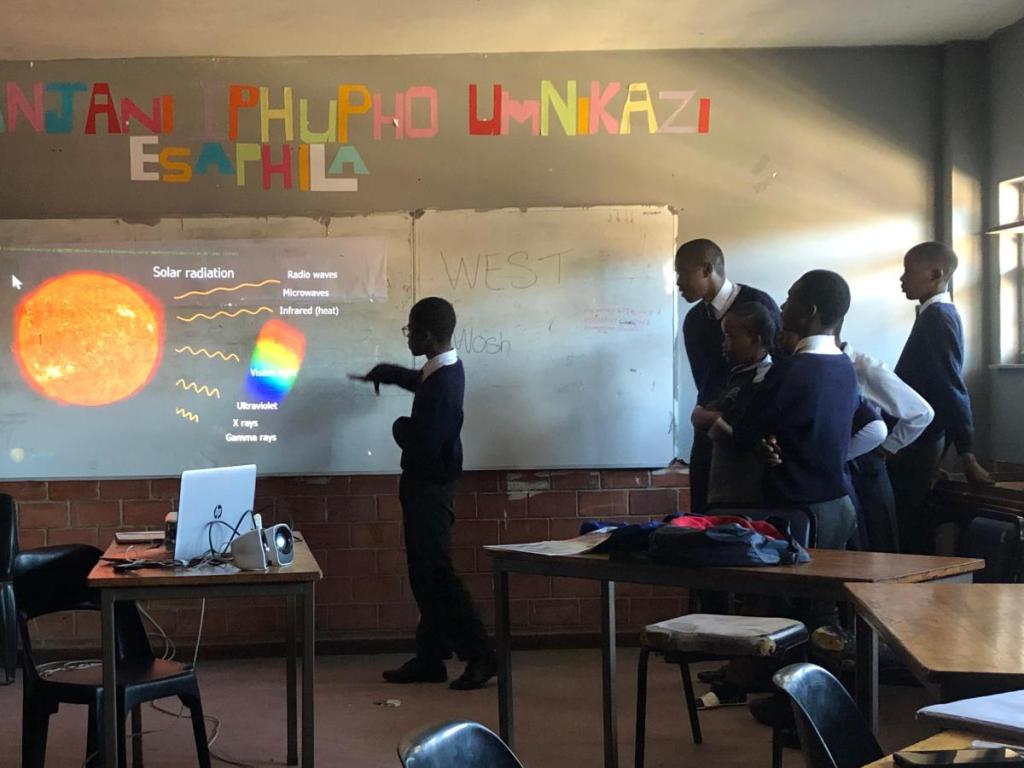
The learners then presented the slides to the larger group and gave brief summaries of anything they had remembered. I reminded them that this was not school and that there was no evaluation, that they should not feel pressured or stressed, but just quickly walk us all through some of the highlights. This was a fun and highly entertaining, the learners were very enthusiastic.
Unit 7 “What does climate change look like”?
The video for this unit shows the many faces of climate change – changes in the weather, changes on land and in the oceans, changes in the frozen parts of the world, sea level rise. We all felt a bit depressed at the end. But everyone agreed when I said, “These things are happening anyway, whether we are aware of it or not. Myself, I prefer not to be ignorant of what is going on. I would rather know, because then I maybe do something about it, and also then I can adapt my life and not get caught by surprise.”
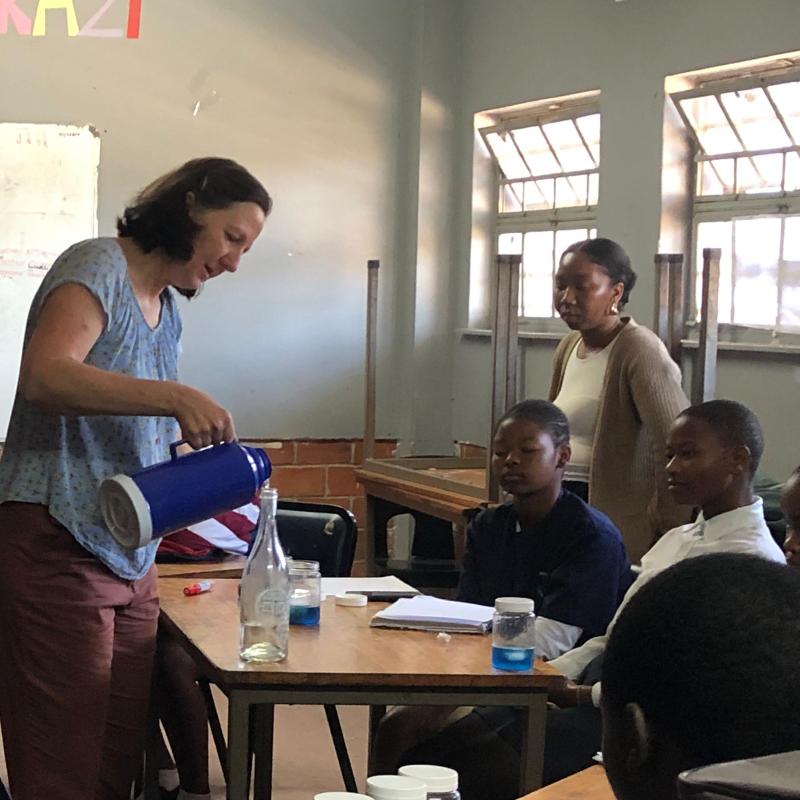
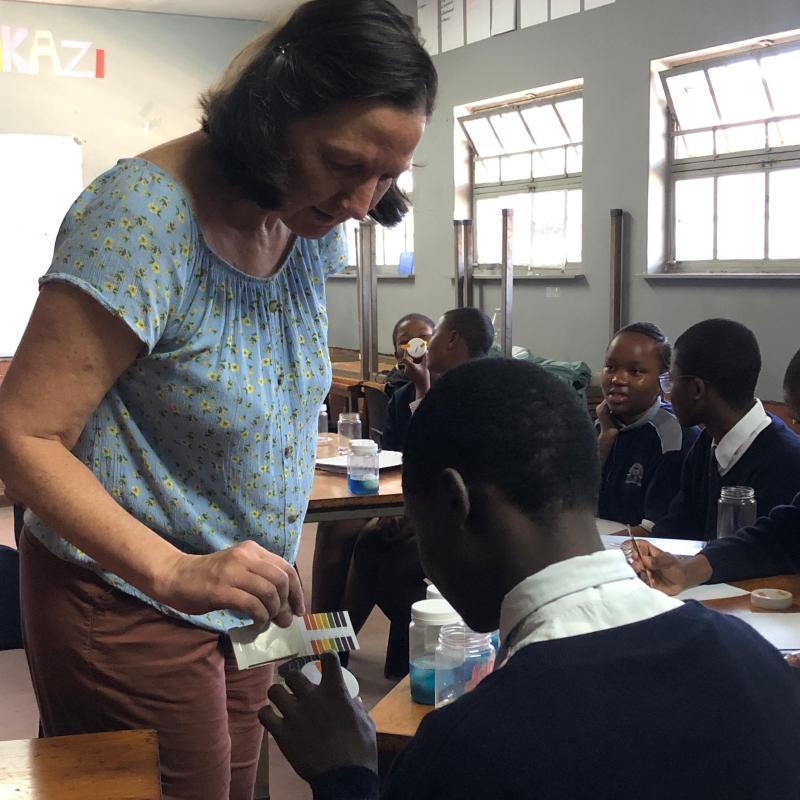
We then carried out two simple experiments about sea level rise caused by melting glaciers and warming oceans, and one about ocean acidification and the effect on calcium carbonate solubility.

Unit 8 “Why should I care? How does climate change affect me?”
On the first day the learners went home with a questionnaire, to interview an older person in their household. They asked about any changes or disasters they had experienced during their lifetime.
On the second day, learners interviewed each other, in a mock TV show, talking about their family’s – or their own – experiences and opinions. “Who has family or friends who may not have heard about climate change? What could you say to them? How would you explain climate change to your granny?” I was blown away with the confidence and enthusiasm with which the learners threw themselves into this activity.
The results speak for themselves. Enjoy!
The Unit 8 video covers the many ways that climate change affects us as humans – our food systems, health and wellbeing, the economy – and how it can cause poverty, displacement and conflict. It explains how we depend on nature and how climate change threatens our entire society, often in complex ways.
While watching the video, learners listened out for facts that might answer the question: “Why did the Nobel Prize for Peace get awarded to people who spread knowledge about climate change? How could climate change disturb the peace, between individuals, communities or countries?”
Learners paired up to discuss this question, we collected ideas from the floor and discussed them in the big group. Responses included: communities or countries fight over scarce resources, such as food, wood or water; people fight with their governments over policies or unfair food allocations; activists fight with law enforcement; ‘false activists’ turn environmental causes into terrorism. Another two short videos, by international peace organizations, rounded off this section.

Unit 11 “What can I do about climate change?”
Finally we get to the most important part: action. The interactive video highlights the top priorities, based on where the most greenhouse gases come from, and where action would therefore have the greatest ‘bang for buck’. It also talks about climate justice, an important topic for young people living in underprivileged conditions.
Unit 13 “Electricity”
The third day was devoted to the top action area: energy – more specifically, electricity. We started with a game called ‘Circuit Breaker’, where we passed ‘electrons’ from a ‘battery’ around a ‘circuit’. One person was the ‘switch’, another the ‘radio’, another a ‘resistor’. When things got out of hand, and ‘sparks’ started to fly, the ‘circuit breaker’ tripped, and the game had to be ‘reset’.

Then we talked about electricity in the home: the distribution board, the electricity meter, different ways of purchasing electricity.
It’s easy to save electricity in the home, just by doing things slightly differently. Thereby we can reduce our energy carbon footprint as well as our monthly electricity bill. So how much power does it take to boil a cup of water – in a kettle? On a stove? In a microwave? We timed boiling water with different appliances, and converted the answers to kWh, grams of greenhouse gas emissions, and into Rands and cents. Then we cooked a pot of rice by wrapping it in a blanket.


On a personal note: I (Marlies) would like to thank Martha Bishai and her team at the Umkhumbane Schools Project – especially Precious, Nokwanda – from the bottom of my heart for their support and partnership. Years ago Martha invited me to engage their biodiversity group. Since then Martha’s encouragement and participation inspired me to keep going forward, and to dare think bigger and aim higher. I am deeply grateful for believing in this work and investing in EASTER Action!


 EASTERaction