Hot box cooking

Cooking in a hot box / hot bag saves electricity while reducing our carbon footprint. Food takes only slightly longer to cook than on the stove, and can be left unattended (it doesn’t burn or boil over, and doesn’t need to be stirred).

I even find that stews and soups cooked like this tastes better and more fragrant. Rice is more fluffy and evenly cooked.

A hot bag can also be used to keep things cool – more efficiently than a cooler box.

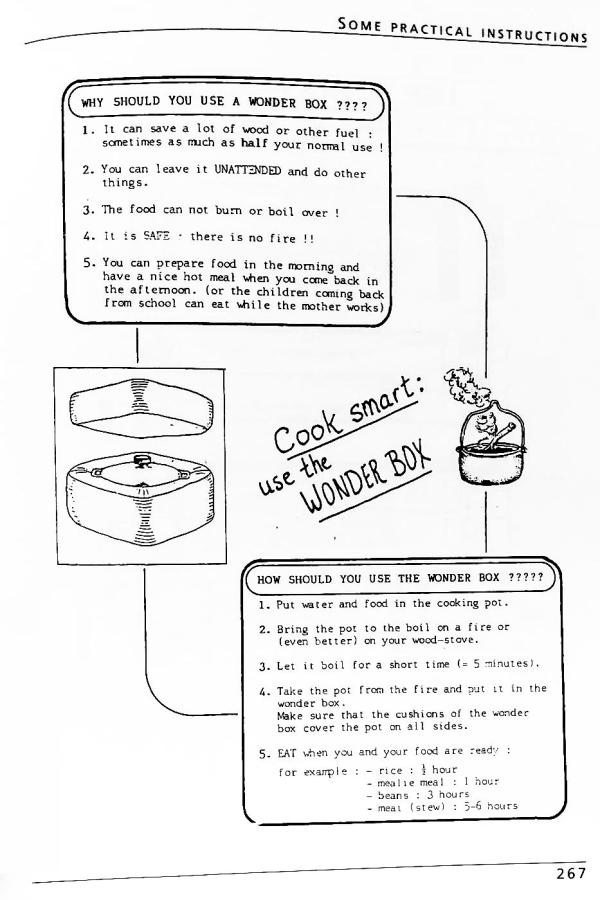
This is the kind of hot box / wonderbag / hay box that one can buy, promoted here by the Department of Economic Development, Tourism and Environmental Affairs.

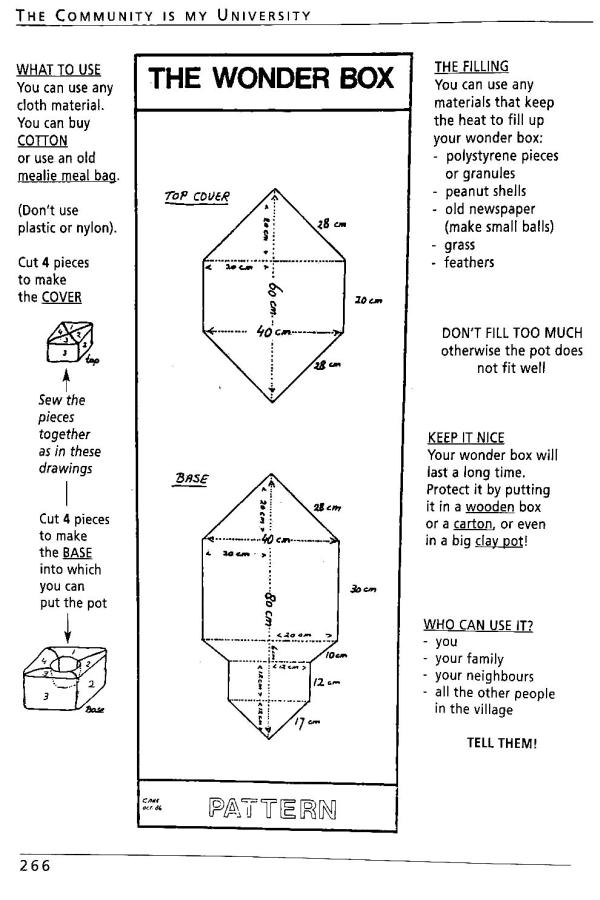
This beautiful book on community development and rural health, has instructions for rural women on how to make a ‘wonder box’ out of old cloth such as old linen mealie meal bags and stuffed with insulating peanut shells, grass, feathers or old newspaper.

You don’t need a box at all though. Some warm blankets work just as well. Hikers know this trick: you only need one little gas cooker for a 3-course meal. Boil a pot of rice, wrap it in your sleeping bag, then prepare your soya mince sauce (which cooks much better, without burning, in another sleeping bag), while you cook the dried vegetables (or make a nice cup of Milo).

Hiking and camping at Mont-Aux-Sources in the Drakensberg.

At sea level, water boils at 100°C. For every 300m rise in altitude, the boiling point of water is about 1°C lower. So at the top of Amphitheatre, at 3200m, water boils at 89°C. At high altitude food simply takes longer to cook – just something to keep in mind.

For my kitchen I recycled an old kiddies’ duvet that had gotten lumpy. I use this regularly to cook rice, stews, soups – anything that otherwise needs prolonged simmering on the stove. It really helps during loadshedding: as long as I get the pot boiled before the power goes off, no problem.
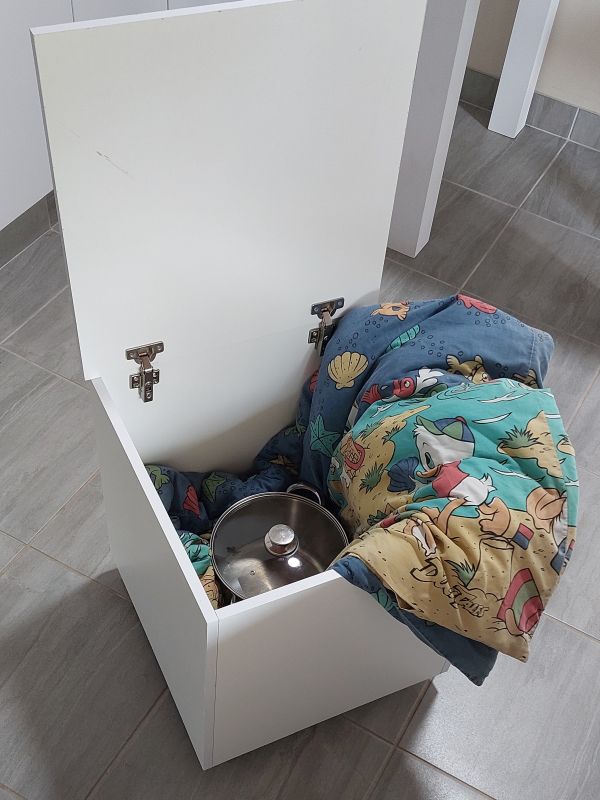
I got this fancy solid box made, on wheels, with a lid. It goes under the table, serves as a seat, and when needed, it comes out and becomes an oven.
How much electricity (and carbon dioxide emissions) does a hotbox avoid?

That depends on the kind of stove we are comparing it against, and the kind of food we are cooking. Since one needs to bring the food to the boil either way, the hotbox only saves on the simmering time. Food that only takes 15 min to cook on a stove would save only a little electricity; food that has to cook for hours, saves a lot. So the cooking box is particularly useful for meals that require longer cooking times.

1kWh electricity produces approximately 1kg of carbon dioxide emissions.

For those who like actual numbers, Eskom reports that it produced 198 281GWh of electricity in 2022, with 207.2Mt carbon dioxide emissions (plus 32.90Mt ash and 66.65kt particulate matter). Converted that is 198,281 million kWh and 207,200 million kg. Divide kg by kWh to get emissions per energy used.

A typical 1000W stove plate, if set to maximum heat, would use 1kWh per hour, and produce 1kg of carbon dioxide in emissions. So let’s say you simmer food (on level 3 out of 6) then you can assume a typical 1000W plate will consume approximately 0.5kWh per hour on half heat, which equates to about 0.5kg carbon dioxide. Now do that every day. Perhaps you use more than one stove plate at a time. All that adds up very quickly.

Please have a look at the total kWh on your last monthly electricity bill, and multiply that number by 12 to get the number of kg of carbon dioxide your household adds to the atmosphere every year. Now think: you can do something about that. Just dig out an old blanket and start today!

Previous posts:

Solar home

As I write, our neighbourhood is wrapped in darkness. At Stage 6 national load shedding, electricity cuts out several times a day. But we hardly notice. We enjoy the benefits of energy that shines down from the sky, for free, every day.

In August we installed a solar power system. After fretting for a while over the cost, we saved up and just did it, knowing that this investment will pay itself back in a few years. After that, electricity will be free.

Installed and pumping electricity!

Best of all, we reduced our family’s carbon footprint, making a major contribution from our side towards solving the climate change crisis.

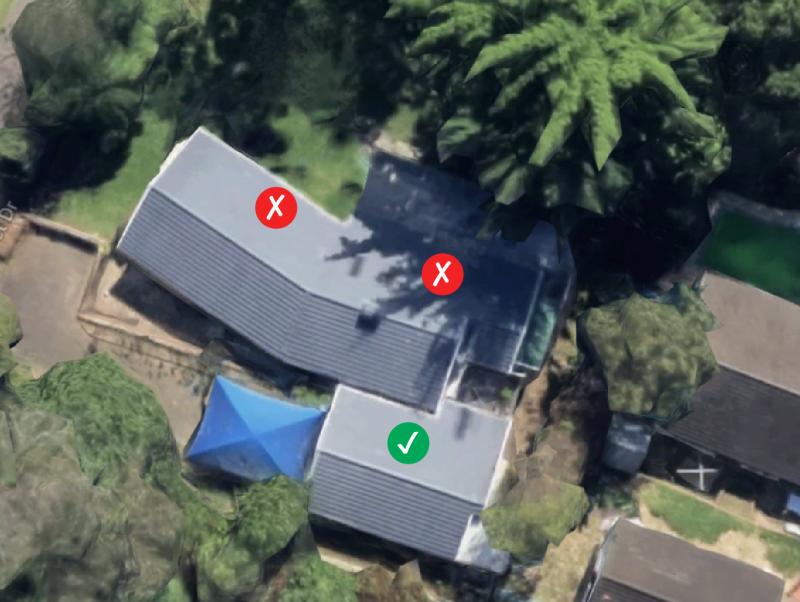
The best location for solar panels was the garage roof, as it is the most nearly North-facing, with the least shade.

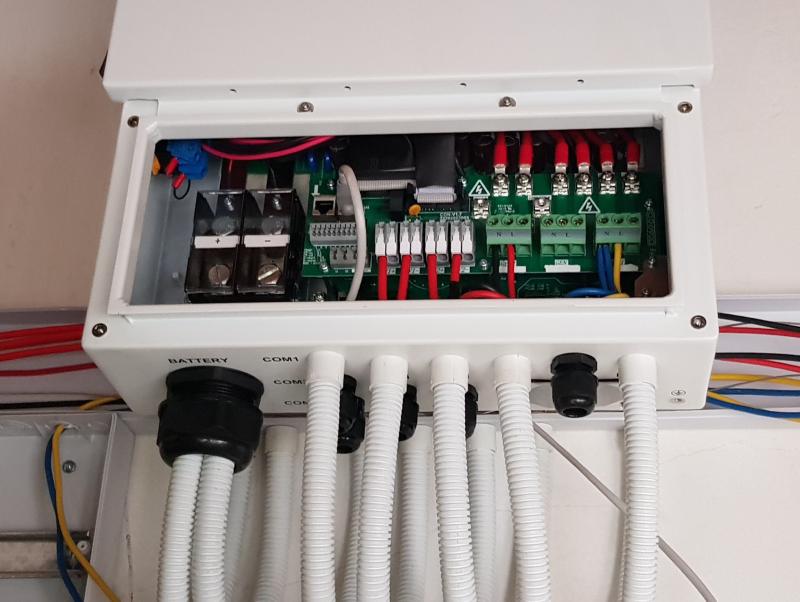
The solar panels convert sunlight into electricity. This power is variable, and it comes in as DC (direct current) while the home uses AC (alternating current). So the current has to go through an inverter.

The inverter receives electricity (from the panels, from the grid or from a battery), converts it as required, and sends it as required to the home or the battery or exports it to the grid. Beware: the inverter is noisy.

Batteries supply power at night. Without them electricity would only be available during daylight hours. They act as a storage tank, ensuring a steady supply while power production peaks and dips. The inverter also needs a battery to start up during power outages (it is a computer after all). This took me a while to understand. Without electricity from the grid or from a battery, the inverter cannot power up in the morning, and the solar panels are useless.

The Watt ratings on the panels indicate the maximum power produced per square meter. I don’t know if one ever reaches that maximum, but today at lunch time (a blazing sunny spring day) our panels produced 85% of their total rating.

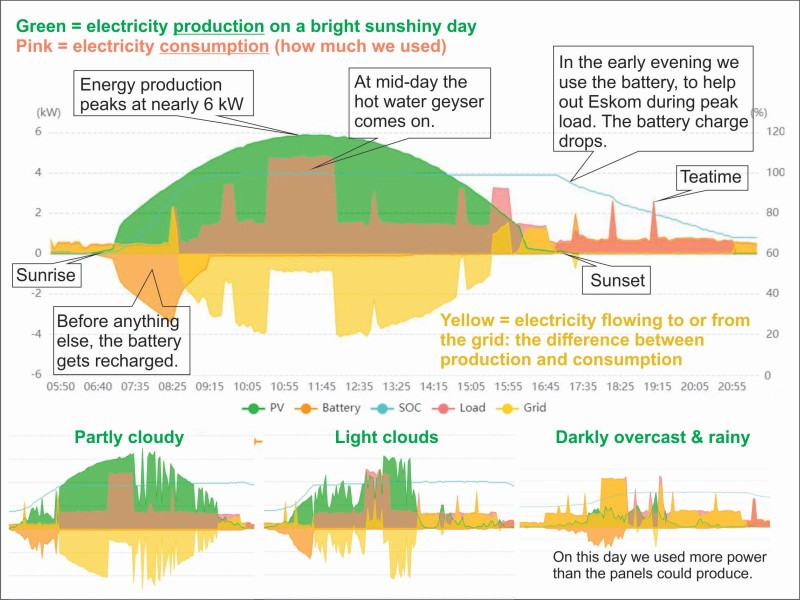
An online app records and makes pretty graphs of everything – the energy being harvested from the sun, our electricity usage, how much we import and export from and to the grid, even an estimate of total savings – in Rands (our monthly electricity bill) and in carbon dioxide (1.8 tons in under 3 months, or more than half a ton of coal). Wow!

Electricity production (green area) depends on the weather, the length of the day, and other factors.

At this time of year the weather is extremely variable, swinging from blazing hot sunny days to grey fog and drizzle, and back. Despite this, our solar system has supplied our needs, on average. On some days we import from the grid, on others we export. Even on the darkest days with heavy cloud cover, the panels produce at least enough electricity to keep the fridge and freezer going 24/7 (with two batteries). But this is good to know.

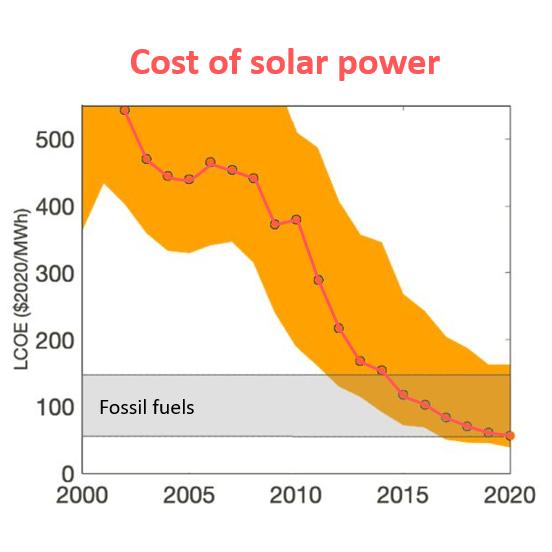
Back to question of money: these past few years the cost of solar power has come DOWN, to the point where it is now getting cheaper than electricity from fossil fuels (like coal power stations). At current electricity prices our system (which we paid for cash) would take about 10-11 years to pay off.

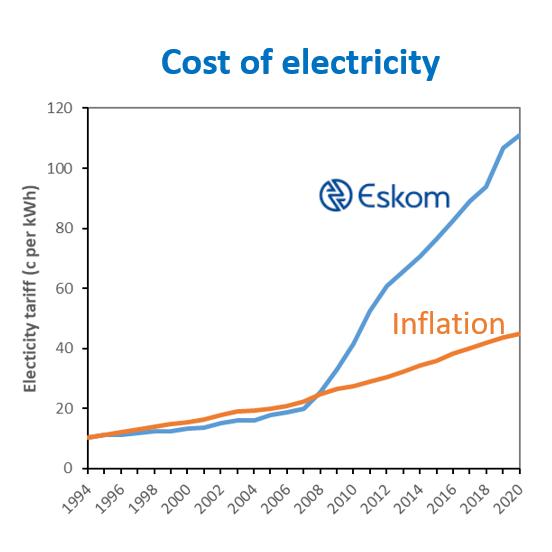
But electricity prices in South Africa have gone UP, faster than inflation (15% annual increase on average since 2008, which is 3x faster than inflation). If this trend continues (very likely) we will get our money back in about 7 years, after that, profit. So this is an investment that makes business sense. No wonder more and more businesses are installing solar power. In theory one can start small and add more over time.

I just discovered that 13 October was International Day for Disaster Reduction. On 11 October 50% of Durban city was without power after an explosion at a major substation. Half a large city! The Durban flooding disaster damaged electricity infrastructure and caused major power outages. Sometimes we lose power for several days due to local faults. And have I mentioned the load shedding?

In every way solar power makes sense. It makes sense for today, it makes sense for the future, it makes sense financially, it makes sense for disaster readiness and for peace of mind.

by Marlies Craig