Teaching with ulterior motives

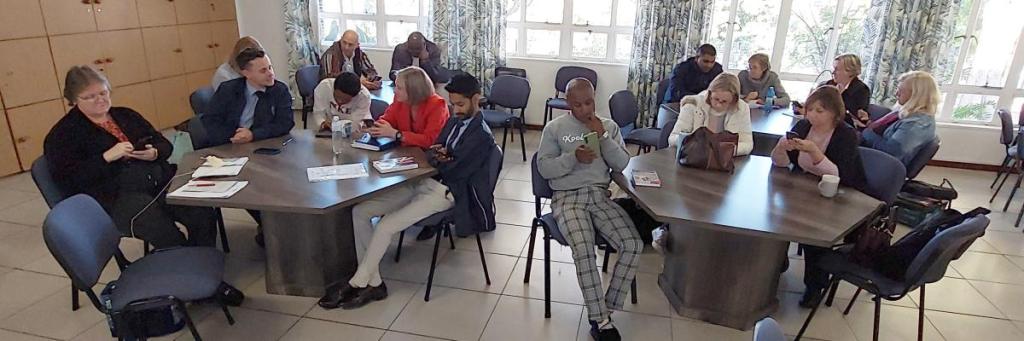
Last week I presented to around 70 pre-service and 3rd year student teachers at Edgewood Campus (UKZN School of Education). Even though the topic was ‘climate change’, the lesson was ‘teaching methods’.

Prof Angela James had asked me to present, partly to give them an introduction to climate change, partly to demonstrate to the students some simple interactive teaching methods.

Yes, I may be a qualified educator, but I am not a school teacher or university lecturer, and my primary goal is generally not to transfer information and to help students pass exams. When I teach, I tend to have ulterior motives.

Pass on passion

In past years, when I did all those insect events with children and adults, my primary goal was to share my passion, to get others as excited and in love with insects as I am. I wanted people to appreciate these ‘lesser’ life forms, understand their value and their needs, and the importance of healthy ecosystems, so they would do things to protect and restore nature.

Stoking the in-born love for nature and other life forms (called ‘biophilia’)

Inspire action

Now as I run ‘educational’ events on climate change, my goal is for people to truly and deeply ‘get‘ the most important facts about climate change, understand the nature of the problem, the urgency of the situation, and find out how easy it is to make a difference, and encourage people to go and do their bit.

The ulterior motive behind teaching people where most greenhouse gases come from is obvious: start here!

Empowering with know-how

I have also created and run formal training courses over the years. My goal then was empowering people to do stuff they didn’t know how to do before (rather than just knowing stuff), building useful skills that would make them more effective in their jobs.

We learn best by doing. Not just by listening and watching. Learning is most effective when it is hands-on. That may require detailed, step-by-step instructions, so you don’t get lost, so you can do it again later, on your own, without an instructor’s help. But the important thing is that you do it, yourself. Deep, lasting learning comes when we apply and use head knowledge, in practice. The more relevant to real-life, the better.

Building relationships

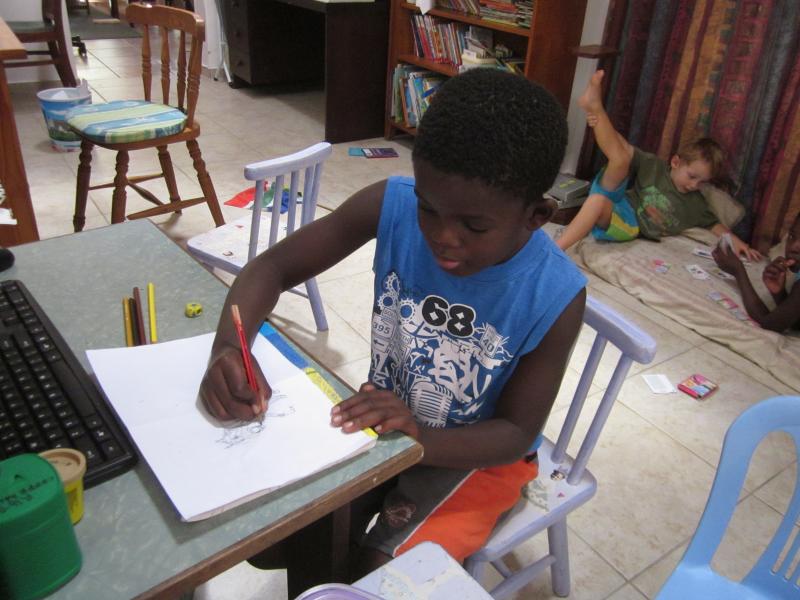
Back in the days when I homeschooled my children, my primary goal, again, was not education. People homeschool for all kinds of reasons. My goal was to spend time and bond with our adopted children. They had never experienced being at home with mom, and I wanted to give them that foundation. Later I also homeschooled our biological child, again not for the sake of education, but to nurture him through some difficult years until he was ready for mainstream school.

The teaching part of homeschooling was just an excuse to spend time together and do fun things together. Like reading! Or doing math! Or doing science!
Learning is playing

So from my perspective there is absolutely nothing onerous about learning. My experience from homeschooling and from many educational events, with children and youth, is that kids are born hungry and eager to learn. They are wired to learn, and they find learning new things fun and satisfying.

Even newborns are like little live computers, switched on and buzzing, ready to record and store and process every bit of input, from the moment they take their first breath (and even before birth).

Toddlers don’t care if they fall over while learning to walk – they just get up and try again, until they get it right. They keep asking ‘why? why? why?’ Failing and trying again and asking for information comes so naturally to them. They learn skills as they play. That is why it is so important for young children to get lots of opportunity to play.

Discovering the joy of reading before the art of sitting

Sadly, it is possible for this natural hunger for learning to be ruined, perhaps by the school system (which emphasizes rules, marks and reports), perhaps by careless teachers or demanding parents, by making the learning experience painful, stressful, boring, discriminatory, etc. or by making failure shameful, embarrassing, anxious, etc. What a lost opportunity!

Rediscover the joy

Adults who have lost the joy in learning, may even find it again, together with their learners, by being playful, exploring, not being afraid of getting it wrong the first time. It is OK not to know things. Teachers really shouldn’t feel they must have an answer for everything. In fact, the more you learn, the more you realize how much you don’t know, and this can make one eagerly open-minded to new ideas and trying new things.

Learning is not a serious business, it is playful. New knowledge – and the trial-and-error that often goes with it – is one of the things that makes life enjoyable and worth living. Over time, and with hard work and repetition, you also learn to do things skillfully, systematically aiming for excellence. This can further add to the pleasure and satisfaction of learning.

As adults we have this amazing and important role to accompany children for a brief time on their life-long road of learning. Teachers – and educators in general – have an opportunity to walk some of this journey with their learners. It is a privilege and a calling and a huge responsibility. Let us make the most of it!

Gamification

After a recent workshop, one participant in his feedback wrote, “the gamification and interactive-ness of the activities will improve the youth and children’s understanding of climate change.”

Gamification.’ I like that word. It means using games or game-like approaches in non-game contexts or activities, to engage people, motivate action, promote learning and solve problems, in both formal and informal situations.

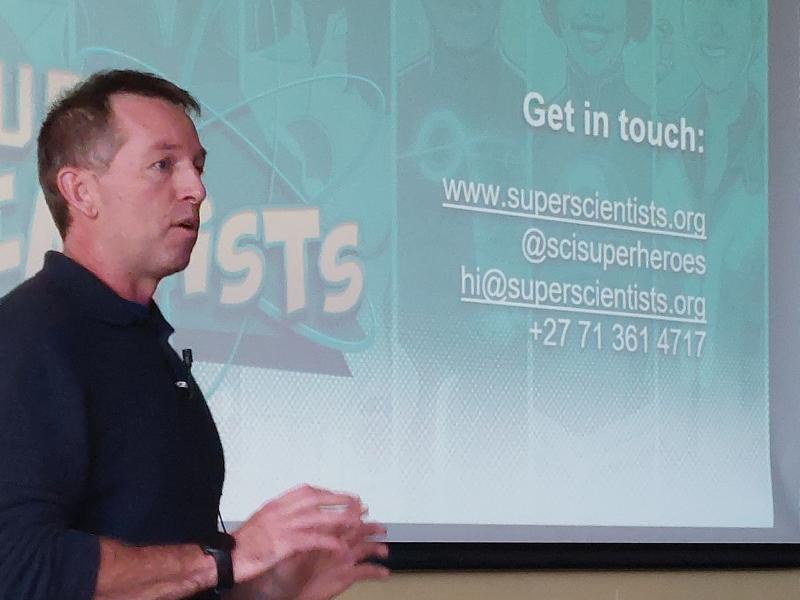
Talking about gamification, after my climate change presentation, Justin Yarrow from Code Makers presented some of the amazing playing cards, comics and games his team have produced. ‘Super Scientists‘ super-hero characters – based on real-life scientists and science champions – promote science and STEAM careers for young people. He demonstrated how you could point your phone at a ‘Super Scientist’ poster, and then – I don’t know – it suddenly became interactive and you could find out about the real person behind the super-hero. Totally cool!
Justin Yarrow of Super Scientists
Thanks to Edgewood for the opportunity!

Progress with partners

Let me report back briefly on three recent events with Kloof High School, which have been extremely rewarding and motivating.

After attending the recent WESSA KZN EcoSchools Prizegiving, where Kloof High got their first Green Flag for environmental activities, Corné van Vollenstee (Life Science subject head, who also heads up the environmental club) reached out to me with a request to help the school introduce environmental education across all subjects.

Wow! This was so proactive of Kloof High, and such perfect timing for EASTER Action!

Having finalized the first four units of the What I Can Do About Climate Change programme, and piloted them from my side, it was time to test the hand-over process. One-by-one we will never reach enough people to make a measurable difference. Knowledge, know-how and determination to act – these have to spread throughout society, and urgently!

Introductory session

To begin with, Corné wanted to engage her fellow teachers, to try and get everyone interested and on board. So, end of May, we had an interactive session on climate change with the entire staff of 65, to raise this critical global issue.

The teachers were very interested and responsive, which was encouraging. Positive feedback included: “Very interesting and informative… interactive and engaging… Activities were an eye opener… A real wake up for me!… The practically and relevance of the topic and how it relates to the educational space… Very user friendly advice… Thank you we enjoyed. Please come again. It was so educational.”

Some asked for “more activities that we can do at home to help with eco systems… a digestible version of the presentation to direct towards learners/youth… should be an ongoing initiative.”

Getting ready for the ‘WOW’ moment that never fails to leave a lasting impression: which sector produces the most greenhouse gases – and by how much…

Co-production workshop

Being very supportive of this new initiative, the headmaster agreed that we should pursue a partnership to take this work forward. The plan is to run drafts of the 80-or-so activities that form part of the WICD programme through a process of co-production and review, and for the teachers to try out some activities with their learners.

End of July, the 16 subject heads participated in a 1 1/2 hour workshop, where they received a more detailed introduction to the WICD programme. Then we spent an hour watching the first four little videos, and going over the first batch of activities. There was something for almost every subject.

The teachers each picked an activity that might be relevant for their subject, reviewed it and filled in a detailed feedback form. They responded to questions such as: What do you like about this activity? Pros? – What do you not like? Cons. – What practical or other challenges do you foresee? – Does the Aim make sense as stated? If not please suggest alternative. – Can it double up as a school project or practical? – If it allows assessment, how would you assess it? Draft a rubric. They rated, if applicable, the suitable age or grade level for the activity, and in some cases indicated a particular part of the curriculum the activity speaks to.

The very helpful comments and suggestions are being incorporated into the programme currently.

Even though it was just a short session, and only a limited number of activities could be processed this time round, it proved that such a co-production workshop can generate much valuable feedback that draws on the practical expertise of in-service educators.

Subject heads logging into their private page on the EASTER Action website.

Multiplier workshop

Apart from expanding environmental education within their own school, Kloof High also expressed a wish to increase their environmental activities in the wider community.

It was time to test the ‘Multiplier’ concept, which takes the ‘train-the-trainer’ idea one step further: yes, empower educators to engage their learners, but then also empower learners to engage their families. By introducing activities that involve real-life activities in the home environment, we hope to spread knowledge and know-how way beyond the immediate participants, building climate literacy, and hopefully stimulating citizen climate action in the wider society.

Each participant received access to the videos and activity guides for the first four units, to use with their learners, via a private workshop page on the EASTER Action website. We have set up various feedback forms, to harvest comments and experiences, and we look forward to finding out if this approach works. Ultimately we hope that showcasing what others are doing will help motivate engagement and participation. It is a work in progress.

The workshop was attended by 11 amazing people: 2 school teachers (Hillcrest High, St Mary’s) and 9 environmental educators (including from WESSA, Wild Trust, Umkhumbane Schools Project, DUCT).

Feedback from participants: The small group format was much appreciated, as it gave everyone a chance to meet properly, network and hear about what others are doing. It also allowed ample time for questions and discussion. The programme content was described as “outstanding, especially with the short videos for each section… clear and easy to understand… useful… well-presented… Having the chance to go through each of the highlighted modules, watch the videos, and try the activities, was very beneficial… The activities were very useful in giving me ideas on how to better facilitate a lesson on climate change.”

Participants suggested keeping future workshops short and small, and also providing teaching tools (activities and videos) that speak better to younger learners at their level. The current content is aimed at high school learners, and is also suitable for grade 6&7.

Thank you everyone who came and made this such a memorable and pleasant day! And thank you Corné for your passion, and Kelly for your help with the organization!

The wonderful participants of Multiplier Workshop ‘Aardwolf’ – hopefully the first of many.