
Last week I presented to around 70 pre-service and 3rd year student teachers at Edgewood Campus (UKZN School of Education). Even though the topic was ‘climate change’, the lesson was ‘teaching methods’.
Prof Angela James had asked me to present, partly to give them an introduction to climate change, partly to demonstrate to the students some simple interactive teaching methods.
Yes, I may be a qualified educator, but I am not a school teacher or university lecturer, and my primary goal is generally not to transfer information and to help students pass exams. When I teach, I tend to have ulterior motives.
Pass on passion
In past years, when I did all those insect events with children and adults, my primary goal was to share my passion, to get others as excited and in love with insects as I am. I wanted people to appreciate these ‘lesser’ life forms, understand their value and their needs, and the importance of healthy ecosystems, so they would do things to protect and restore nature.

Inspire action
Now as I run ‘educational’ events on climate change, my goal is for people to truly and deeply ‘get‘ the most important facts about climate change, understand the nature of the problem, the urgency of the situation, and find out how easy it is to make a difference, and encourage people to go and do their bit.

Empowering with know-how
I have also created and run formal training courses over the years. My goal then was empowering people to do stuff they didn’t know how to do before (rather than just knowing stuff), building useful skills that would make them more effective in their jobs.
We learn best by doing. Not just by listening and watching. Learning is most effective when it is hands-on. That may require detailed, step-by-step instructions, so you don’t get lost, so you can do it again later, on your own, without an instructor’s help. But the important thing is that you do it, yourself. Deep, lasting learning comes when we apply and use head knowledge, in practice. The more relevant to real-life, the better.
Building relationships
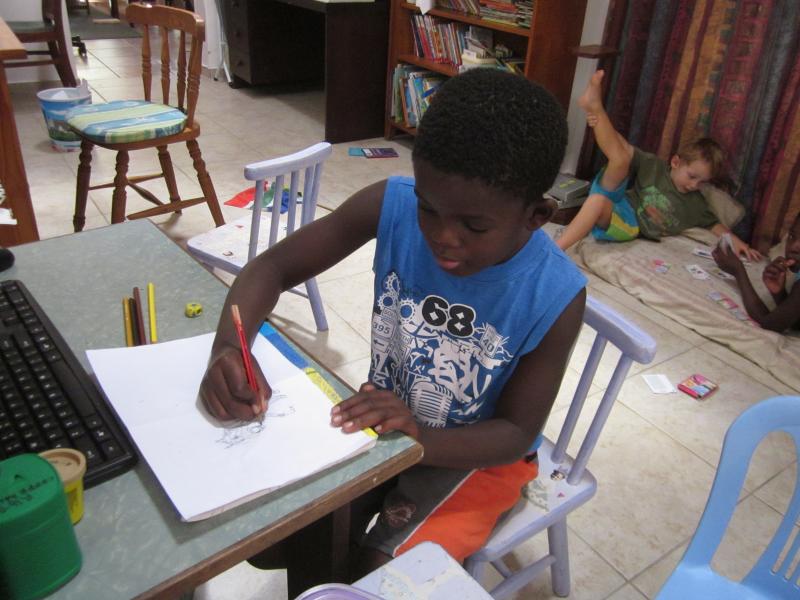
Back in the days when I homeschooled my children, my primary goal, again, was not education. People homeschool for all kinds of reasons. My goal was to spend time and bond with our adopted children. They had never experienced being at home with mom, and I wanted to give them that foundation. Later I also homeschooled our biological child, again not for the sake of education, but to nurture him through some difficult years until he was ready for mainstream school.
The teaching part of homeschooling was just an excuse to spend time together and do fun things together. Like reading! Or doing math! Or doing science!


Learning is playing
So from my perspective there is absolutely nothing onerous about learning. My experience from homeschooling and from many educational events, with children and youth, is that kids are born hungry and eager to learn. They are wired to learn, and they find learning new things fun and satisfying.
Even newborns are like little live computers, switched on and buzzing, ready to record and store and process every bit of input, from the moment they take their first breath (and even before birth).
Toddlers don’t care if they fall over while learning to walk – they just get up and try again, until they get it right. They keep asking ‘why? why? why?’ Failing and trying again and asking for information comes so naturally to them. They learn skills as they play. That is why it is so important for young children to get lots of opportunity to play.

Sadly, it is possible for this natural hunger for learning to be ruined, perhaps by the school system (which emphasizes rules, marks and reports), perhaps by careless teachers or demanding parents, by making the learning experience painful, stressful, boring, discriminatory, etc. or by making failure shameful, embarrassing, anxious, etc. What a lost opportunity!
Rediscover the joy
Adults who have lost the joy in learning, may even find it again, together with their learners, by being playful, exploring, not being afraid of getting it wrong the first time. It is OK not to know things. Teachers really shouldn’t feel they must have an answer for everything. In fact, the more you learn, the more you realize how much you don’t know, and this can make one eagerly open-minded to new ideas and trying new things.
Learning is not a serious business, it is playful. New knowledge – and the trial-and-error that often goes with it – is one of the things that makes life enjoyable and worth living. Over time, and with hard work and repetition, you also learn to do things skillfully, systematically aiming for excellence. This can further add to the pleasure and satisfaction of learning.
As adults we have this amazing and important role to accompany children for a brief time on their life-long road of learning. Teachers – and educators in general – have an opportunity to walk some of this journey with their learners. It is a privilege and a calling and a huge responsibility. Let us make the most of it!
Gamification
After a recent workshop, one participant in his feedback wrote, “the gamification and interactive-ness of the activities will improve the youth and children’s understanding of climate change.”
‘Gamification.’ I like that word. It means using games or game-like approaches in non-game contexts or activities, to engage people, motivate action, promote learning and solve problems, in both formal and informal situations.
Talking about gamification, after my climate change presentation, Justin Yarrow from Code Makers presented some of the amazing playing cards, comics and games his team have produced. ‘Super Scientists‘ super-hero characters – based on real-life scientists and science champions – promote science and STEAM careers for young people. He demonstrated how you could point your phone at a ‘Super Scientist’ poster, and then – I don’t know – it suddenly became interactive and you could find out about the real person behind the super-hero. Totally cool!

 EASTERaction