When we hear ‘nesting’ and ‘insects’ in the same sentence, probably the first thing we all think about is the impressive structures built by social insects like termites, ants, bees and wasps. So let’s start there.
A termite nest, or termitarium, is an entire engineered civilization built from dirt, chewed wood and spit. Termitaria can tower several meters above-ground, while the underground foraging tunnels of a mature colony can radiate for 50 to 100 meters and down to depths of 6 to 7 meters to access moisture.
Termite nests are complicated, climate-controlled fortresses, with all the amenities needed for survival…
EASTER Action is very excited to welcome Siziwe Hlongwa to our team! Siziwe is an environmental educator and sustainability practitioner, with wonderful experience working with the youth, and we feel privileged to have someone of her calibre and passion contributing to our mission.
Siziwe is passionate about youth development, environmental stewardship, and community empowerment. She has experience delivering and coordinating environmental education programmes, previously serving with WESSA as an Environmental & Sustainability Educator and Project Coordinator within the UMbogavango Environmental Education Programme. During this time, she also chaired the WESSA youth committee and worked closely with young people to develop environmental leadership and community-based sustainability initiatives.
Her practical experience ranges from guiding marine education at uShaka Sea World (Marine Education), facilitating plant biodiversity sessions at the Durban Botanic Gardens, and environmental education at the Durban Natural Science Museum. This hands-on history of connecting people with nature is exactly what we value at EASTER Action.
Siziwe holds a BSc Environmental Science from University of KwaZulu-Natal and is currently studying further towards a Postgraduate Diploma in Sustainable Development at Stellenbosch University. Her academic background, combined with her training in environmental journalism, gives her a unique ability to bridge the gap between scientific research and community storytelling. She is especially dedicated to the idea of a just energy transition and finding sustainable solutions that work for South African communities.
We believe Siziwe will help EASTER Action grow into a fully-fledged NPO with a strong footprint and an excellent reputation in the environmental education sector. While she is joining us in a flexible, part-time capacity for now, we see her transitioning to a long-term role as we expand our activities together. We also hope that EASTER Action will be a meaningful step in her career, in line with her passion and giftings.
Her energy and ‘can-do’ spirit are a perfect match for our vision of a more resilient and equitable future.
Welcome to the team, Siziwe! We are so happy to have you with us.
Last week I presented to around 70 pre-service and 3rd year student teachers at Edgewood Campus (UKZN School of Education). Even though the topic was ‘climate change’, the lesson was ‘teaching methods’.
Prof Angela James had asked me to present, partly to give them an introduction to climate change, partly to demonstrate to the students some simple interactive teaching methods.
Yes, I may be a qualified educator, but I am not a school teacher or university lecturer, and my primary goal is generally not to transfer information and to help students pass exams. When I teach, I tend to have ulterior motives.
Pass on passion
In past years, when I did all those insect events with children and adults, my primary goal was to share my passion, to get others as excited and in love with insects as I am. I wanted people to appreciate these ‘lesser’ life forms, understand their value and their needs, and the importance of healthy ecosystems, so they would do things to protect and restore nature.
Stoking the in-born love for nature and other life forms (called ‘biophilia’)
Inspire action
Now as I run ‘educational’ events on climate change, my goal is for people to truly and deeply ‘get‘ the most important facts about climate change, understand the nature of the problem, the urgency of the situation, and find out how easy it is to make a difference, and encourage people to go and do their bit.
The ulterior motive behind teaching people where most greenhouse gases come from is obvious: start here!
Empowering with know-how
I have also created and run formal training courses over the years. My goal then was empowering people to do stuff they didn’t know how to do before (rather than just knowing stuff), building useful skills that would make them more effective in their jobs.
We learn best by doing. Not just by listening and watching. Learning is most effective when it is hands-on. That may require detailed, step-by-step instructions, so you don’t get lost, so you can do it again later, on your own, without an instructor’s help. But the important thing is that you do it, yourself. Deep, lasting learning comes when we apply and use head knowledge, in practice. The more relevant to real-life, the better.
Building relationships
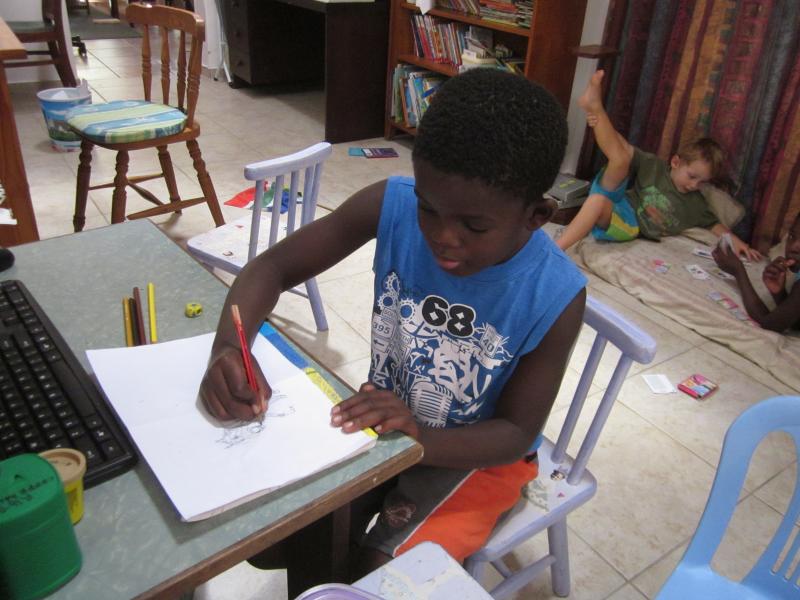
Back in the days when I homeschooled my children, my primary goal, again, was not education. People homeschool for all kinds of reasons. My goal was to spend time and bond with our adopted children. They had never experienced being at home with mom, and I wanted to give them that foundation. Later I also homeschooled our biological child, again not for the sake of education, but to nurture him through some difficult years until he was ready for mainstream school.
The teaching part of homeschooling was just an excuse to spend time together and do fun things together. Like reading! Or doing math! Or doing science!
Our school room was also the play roomHomeschool outing to the fire departmentHistory outing to a local museum – in costumesParticipating in a homeschoolers’ science expo
Learning is playing
So from my perspective there is absolutely nothing onerous about learning. My experience from homeschooling and from many educational events, with children and youth, is that kids are born hungry and eager to learn. They are wired to learn, and they find learning new things fun and satisfying.
Even newborns are like little live computers, switched on and buzzing, ready to record and store and process every bit of input, from the moment they take their first breath (and even before birth).
Toddlers don’t care if they fall over while learning to walk – they just get up and try again, until they get it right. They keep asking ‘why? why? why?’ Failing and trying again and asking for information comes so naturally to them. They learn skills as they play. That is why it is so important for young children to get lots of opportunity to play.
Discovering the joy of reading before the art of sitting
Sadly, it is possible for this natural hunger for learning to be ruined, perhaps by the school system (which emphasizes rules, marks and reports), perhaps by careless teachers or demanding parents, by making the learning experience painful, stressful, boring, discriminatory, etc. or by making failure shameful, embarrassing, anxious, etc. What a lost opportunity!
Rediscover the joy
Adults who have lost the joy in learning, may even find it again, together with their learners, by being playful, exploring, not being afraid of getting it wrong the first time. It is OK not to know things. Teachers really shouldn’t feel they must have an answer for everything. In fact, the more you learn, the more you realize how much you don’t know, and this can make one eagerly open-minded to new ideas and trying new things.
Learning is not a serious business, it is playful. New knowledge – and the trial-and-error that often goes with it – is one of the things that makes life enjoyable and worth living. Over time, and with hard work and repetition, you also learn to do things skillfully, systematically aiming for excellence. This can further add to the pleasure and satisfaction of learning.
As adults we have this amazing and important role to accompany children for a brief time on their life-long road of learning. Teachers – and educators in general – have an opportunity to walk some of this journey with their learners. It is a privilege and a calling and a huge responsibility. Let us make the most of it!
Gamification
After a recent workshop, one participant in his feedback wrote, “the gamification and interactive-ness of the activities will improve the youth and children’s understanding of climate change.”
‘Gamification.’ I like that word. It means using games or game-like approaches in non-game contexts or activities, to engage people, motivate action, promote learning and solve problems, in both formal and informal situations.
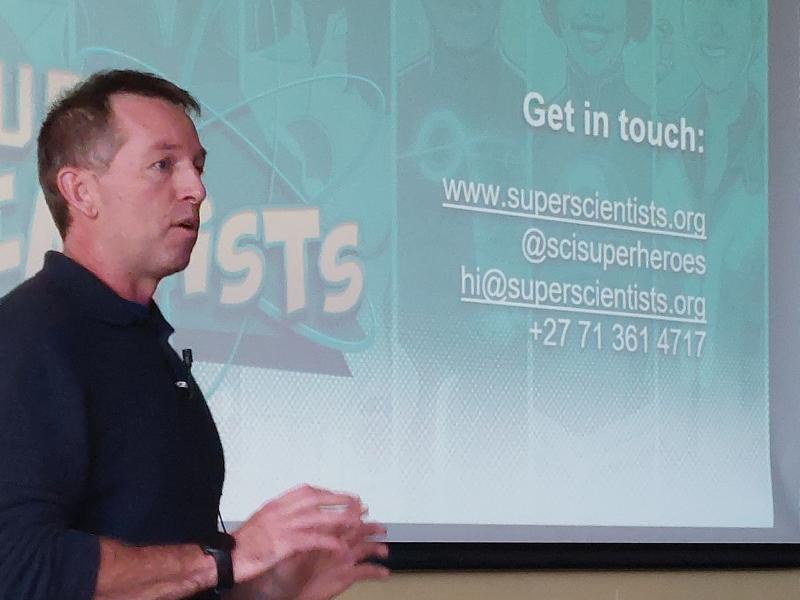
Talking about gamification, after my climate change presentation, Justin Yarrow from Code Makers presented some of the amazing playing cards, comics and games his team have produced. ‘Super Scientists‘ super-hero characters – based on real-life scientists and science champions – promote science and STEAM careers for young people. He demonstrated how you could point your phone at a ‘Super Scientist’ poster, and then – I don’t know – it suddenly became interactive and you could find out about the real person behind the super-hero. Totally cool!
This workshop offers training and resources on climate change, to empower educators to engage learners (and their families), to build climate change knowledge and know-how and stimulate action.
Participants who would like to engage their learners using the resources provided, receive up to 200 climate change booklets for distribution to learners (while stocks last – so don’t miss this unique opportunity). Participants also receive an activity guide and access to online video material.
WHO IS IT FOR? Teachers or other educators of high school-age learners and upwards
The booklet ‘What I Can Do About Climate Change’ was produced by the Durban Office of the Intergovernmental Panel on Climate Change (IPCC) Working Group II Technical Support Unit* (free download). The booklet was prepared to increase the accessibility of IPCC science to help inform personal climate action in Durban.
The What I Can Do (WICD) Action Programme* was developed by the lead author of the booklet (Marlies Craig) to increase active engagement with the booklet. It contains brief lessons (videos), and guidelines for hands-on activities that are suitable for different ages and school subjects. Some are immediately relevant to different parts of the school curriculum. The programme is designed for schools, nature and conservation clubs or educational organizations, adding interest and giving ideas for things to do – in the classroom, on campus, ‘out there’ and at home.
This workshop presents four key units of the WICD Action Programme. In the following months, participants engage their learners (and families, achieving a ‘multiplier effect’) and provide feedback on activities and results. In other words, this is not a workshop that ends when everyone goes home. At a later stage, we hope to host a follow-up Climate Action Expo, where participants can showcase their projects and activities.
*Not an official product of the IPCC. Neither the booklet, nor the programme or training, are reviewed or endorsed by the IPCC.
Globally, biodiversity teeters on the brink of the next great extinction since the demise of the dinosaurs, only this time human activity, not meteorites, are the cause.
As the world strives for sustainable development and tackles critical environmental challenges, a deeper understanding and love of nature is essential. Educating children for the present and the immediate future is key to achieving global sustainability.
2020Vision is an education initiative that wants to give young people ‘glasses’ of passion and knowledge. Humanity must learn to coexist in harmony with nature. The world needs passionate young people who can see clearly, who understand the workings of nature and global environmental challenges, who know what can and must be done about it and who are motivated to act for the environment, both now and in their future careers.
This innovative school curriculum enrichment programme supports biology, life sciences and environmental education. The programme will include:
Teaching resource kit, containing per school:
20 copies of What Insect are You?
A teachers’ guide with
10 stand-alone topical lessons, designed to supplement the South African life sciences curriculum (grades 4 to 12) but suitable for extra-curricular enrichment even for non-science learners of any age;
Instructions for simple, fun practicals involving live insects;
Classroom activities to stimulate discussion;
10 audio-visual episodes;
Additional relevant articles, audio-visuals and Internet links;
Teacher training workshops targeting 20 schools at a time;
Outdoor educational event for 4 children and 1 teacher per school.
2020Vision is unique in its focus on insects. Insects are the dominant life form on earth (at current reckoning), are indispensable in nature, live everywhere, are small enough to handle yet large enough to observe, and are popular with children. Insects are perfect for learning about nature and the environment.
The resource materials, particularly the book and videos, are designed to arouse heart-felt interest, ignite passion and promote a joy in learning, playfully but convincingly covering important biological, ecological and environmental topics. The insect-centered topics surprise and delight children as young as 6, university students, adults and pensioners.
6-min demo video
The first four units are ready for launching, as soon as funding is available.
This weekend I participated in the Illovo Wagtail Conservation Festival. A local community concerned for their local environment, are trying to conserve the tiny little bit of it that is left.
Here in Durban we are privileged to live in the middle of one of 34 global biodiversity hotspots: the Maputaland-Pondoland-Albany ecosystem.
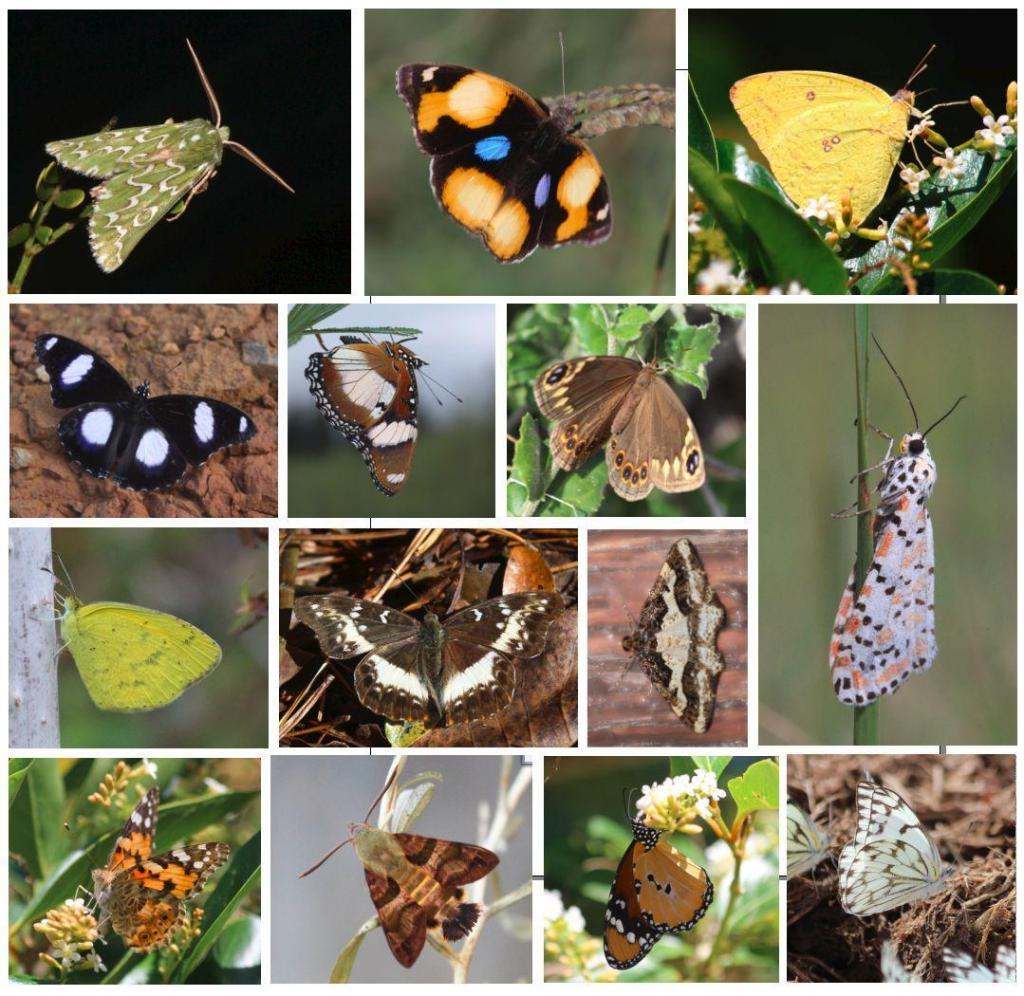
Insect-wise, our amazing Easter-time road trip around the Eastern Cape was dominated by amazing butterfly and moth sightings. Here are just a few examples. The hummingbird moth (Macroglossum sitiene, bottom row, 2nd pic) was special, but my favourite was the Sargasso Emerald (Drepanogynis bifasciata, top left). It is just too pretty for words.
The metamorphosis of a caterpillar into a butterfly is a beautiful picture of Easter, and of baptism: the dying of the old incomplete life, the rising of a completely new glorious being.
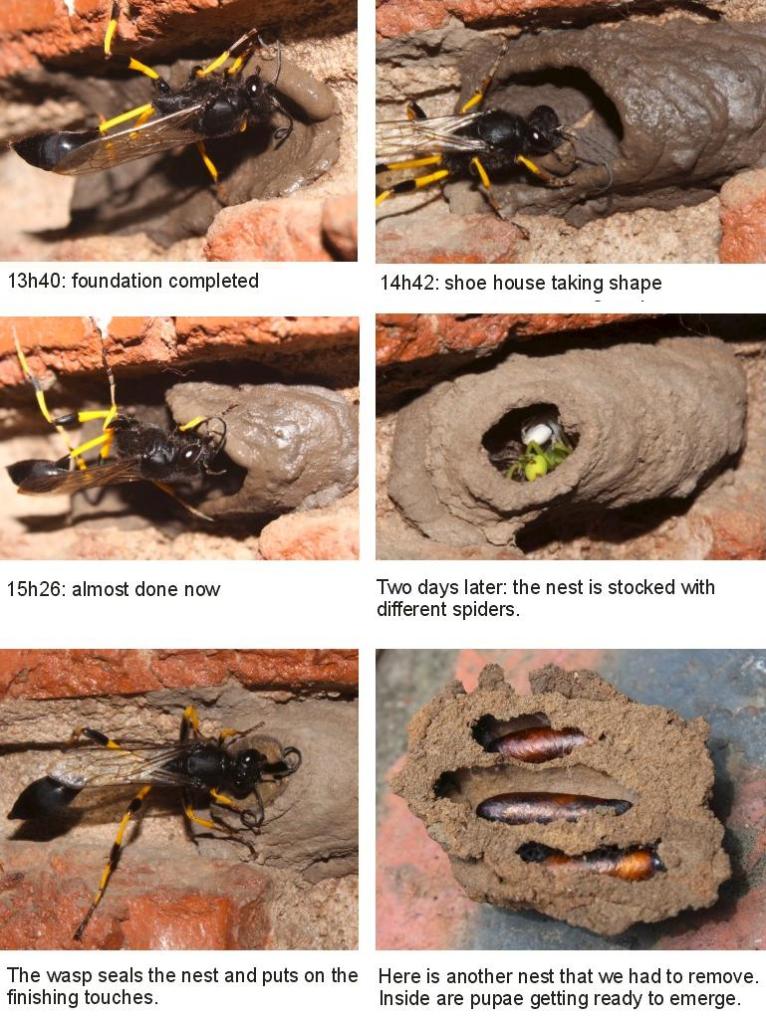
Over two days a mud dauber wasp (Sceliphron spirifex) built and stocked a nest on our dining room wall.
What I found so interesting was that as the wasp added a dollop of mud to the structure, it vibrated its wings. Vibrate – stop – vibrate – stop. What was that all about?
Does it have something to do with the fact that mud can be a thixotrophic substance? Solid at rest, but when disturbed it becomes liquid? Perhaps by vibrating the mud, the wasp was able to shape it, but when it stopped vibrating, the mud set instantly and kept its shape. I’m just guessing.
Thixotrophy can also cause landslides during earthquakes: solid wet soil suddenly turns liquid from being shaken up.
Reading up on this I discovered there is a whole range of substance that show ‘non-Newtonian’ qualities, and a different name for each: rheopecty, pseudoplastic, dilatant.
A really fun example of a dilatant substance (solid when agitated, liquid otherwise) is ‘magic mud’ or ‘oobleck‘, a cornflour-water mixture. Have fun!







 EASTERaction