
Let me report back briefly on three recent events with Kloof High School, which have been extremely rewarding and motivating.
After attending the recent WESSA KZN EcoSchools Prizegiving, where Kloof High got their first Green Flag for environmental activities, Corné van Vollenstee (Life Science subject head, who also heads up the environmental club) reached out to me with a request to help the school introduce environmental education across all subjects.
Wow! This was so proactive of Kloof High, and such perfect timing for EASTER Action!
Having finalized the first four units of the What I Can Do About Climate Change programme, and piloted them from my side, it was time to test the hand-over process. One-by-one we will never reach enough people to make a measurable difference. Knowledge, know-how and determination to act – these have to spread throughout society, and urgently!
Introductory session
To begin with, Corné wanted to engage her fellow teachers, to try and get everyone interested and on board. So, end of May, we had an interactive session on climate change with the entire staff of 65, to raise this critical global issue.
The teachers were very interested and responsive, which was encouraging. Positive feedback included: “Very interesting and informative… interactive and engaging… Activities were an eye opener… A real wake up for me!… The practically and relevance of the topic and how it relates to the educational space… Very user friendly advice… Thank you we enjoyed. Please come again. It was so educational.”
Some asked for “more activities that we can do at home to help with eco systems… a digestible version of the presentation to direct towards learners/youth… should be an ongoing initiative.”

Co-production workshop
Being very supportive of this new initiative, the headmaster agreed that we should pursue a partnership to take this work forward. The plan is to run drafts of the 80-or-so activities that form part of the WICD programme through a process of co-production and review, and for the teachers to try out some activities with their learners.
End of July, the 16 subject heads participated in a 1 1/2 hour workshop, where they received a more detailed introduction to the WICD programme. Then we spent an hour watching the first four little videos, and going over the first batch of activities. There was something for almost every subject.
The teachers each picked an activity that might be relevant for their subject, reviewed it and filled in a detailed feedback form. They responded to questions such as: What do you like about this activity? Pros? – What do you not like? Cons. – What practical or other challenges do you foresee? – Does the Aim make sense as stated? If not please suggest alternative. – Can it double up as a school project or practical? – If it allows assessment, how would you assess it? Draft a rubric. They rated, if applicable, the suitable age or grade level for the activity, and in some cases indicated a particular part of the curriculum the activity speaks to.
The very helpful comments and suggestions are being incorporated into the programme currently.
Even though it was just a short session, and only a limited number of activities could be processed this time round, it proved that such a co-production workshop can generate much valuable feedback that draws on the practical expertise of in-service educators.
Multiplier workshop
Apart from expanding environmental education within their own school, Kloof High also expressed a wish to increase their environmental activities in the wider community.
It was time to test the ‘Multiplier’ concept, which takes the ‘train-the-trainer’ idea one step further: yes, empower educators to engage their learners, but then also empower learners to engage their families. By introducing activities that involve real-life activities in the home environment, we hope to spread knowledge and know-how way beyond the immediate participants, building climate literacy, and hopefully stimulating citizen climate action in the wider society.
Each participant received access to the videos and activity guides for the first four units, to use with their learners, via a private workshop page on the EASTER Action website. We have set up various feedback forms, to harvest comments and experiences, and we look forward to finding out if this approach works. Ultimately we hope that showcasing what others are doing will help motivate engagement and participation. It is a work in progress.
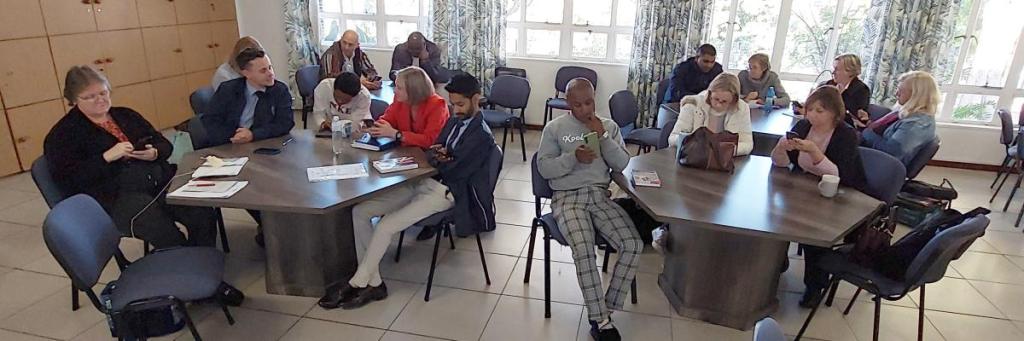
The workshop was attended by 11 amazing people: 2 school teachers (Hillcrest High, St Mary’s) and 9 environmental educators (including from WESSA, Wild Trust, Umkhumbane Schools Project, DUCT).
Feedback from participants: The small group format was much appreciated, as it gave everyone a chance to meet properly, network and hear about what others are doing. It also allowed ample time for questions and discussion. The programme content was described as “outstanding, especially with the short videos for each section… clear and easy to understand… useful… well-presented… Having the chance to go through each of the highlighted modules, watch the videos, and try the activities, was very beneficial… The activities were very useful in giving me ideas on how to better facilitate a lesson on climate change.”
Participants suggested keeping future workshops short and small, and also providing teaching tools (activities and videos) that speak better to younger learners at their level. The current content is aimed at high school learners, and is also suitable for grade 6&7.
Thank you everyone who came and made this such a memorable and pleasant day! And thank you Corné for your passion, and Kelly for your help with the organization!


 EASTERaction