
This is just a quick post to publish various links to useful resources on climate change in Africa, to make them easy to refer to in upcoming events and activities.
The information is based on the work of the Intergovernmental Panel on Climate Change (IPCC), which is the United Nations organization that assesses and reports on the up-to-date scientific knowledge on climate change. In my post from World Environment Day 2022 you will find links to some really beautiful videos on the 6th global Assessment Reports.
What do the IPCC reports say about Africa?
The IPCC reports are frankly humungous! They are almost impossible to read, even for scientists who work in the field. Each report has a Summary for Policymakers to help governments make informed decisions. But otherwise information remains deeply buried within many thousands of pages, unless someone digs it out, and interprets it into ‘normal’ English. I smile as I write this, and so will anyone who ever read or wrote an IPCC report.
While working for the IPCC, I and my colleagues (Drs Andrew Okem, Nina Hunter, Michelle North under leadership of Prof Debra Roberts) made an effort to distill key messages for Africa, producing two booklets.

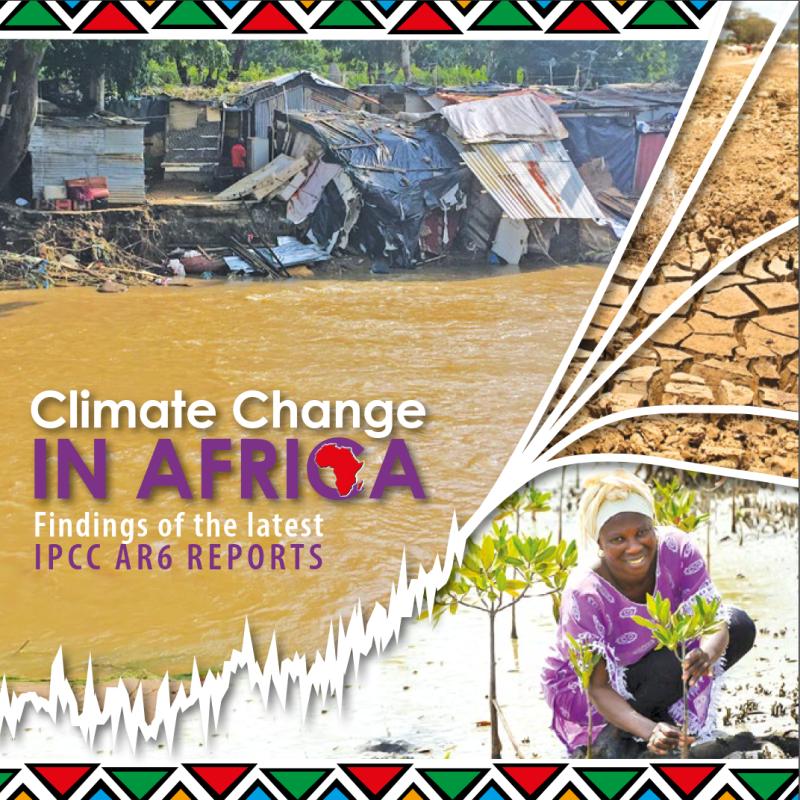
We also produced three short videos on key climate change messages for Africa:
We then produced a booklet on personal climate mitigation in a local, South African context, along with a checklist. This became the foundation for the edu-action programme I’ve been working on since then, under the umbrella of EASTER Action.


These booklets and videos are products of the Durban Office of the Working Group II Technical Support Unit, and not official products of the IPCC. They are not reviewed or endorsed by the IPCC.
The full IPCC Working Group II Africa chapter is of course a brilliant source of scientific evidence on climate change in Africa. The Figures (39 of them) and the Frequently Asked Questions at the end of the chapter are definitely worth looking at. The IPCC released some official derivative products – extracts from the original reports – including regional fact sheets on Africa, by Working Group I (basic science) and Working Group II (Impacts, Adaptation and Vulnerability).
The Climate and Development Knowledge Network has also published an outstanding series of fact sheets on Africa, plus many other super-useful resources, including a number of interesting videos, see https://cdkn.org/resources.

 EASTERaction